
The Role of Ethics in Finance: Promoting Responsible Investment Practices
Introduction
In today’s interconnected and globalized world, finance plays a crucial role in shaping economies and societies. However, with great power comes great responsibility. The ethical dimension of finance cannot be overlooked, as it has the potential to impact individuals, communities, and the environment. This article explores the significance of ethics in finance and how it promotes responsible investment practices.
Understanding Ethics in Finance
Ethics in finance refers to the principles and values that guide financial professionals and institutions in their decision-making processes. It involves a commitment to transparency, fairness, accountability, and the well-being of stakeholders. When ethics are integrated into financial practices, it fosters trust, ensures sustainable growth, and minimizes risks associated with unethical behavior.
Image Source: marketing91.com
Promoting Responsible Investment Practices
- Ethical Investment Strategies
Ethical investment, also known as socially responsible investment (SRI) or sustainable investment, is a practice that aligns financial goals with ethical values. It involves investing in companies and projects that adhere to environmental, social, and governance (ESG) criteria. By integrating ESG factors into investment decisions, ethical investors can support businesses that prioritize sustainability, social justice, and responsible governance.
- Impact Investing
Impact investing goes beyond financial returns; it seeks to generate positive social and environmental impact alongside financial gains. Investors actively allocate capital to projects and enterprises that address societal challenges such as poverty, climate change, and healthcare access. This approach allows individuals and institutions to contribute to the betterment of society while earning financial returns, thus aligning investment goals with ethical considerations.
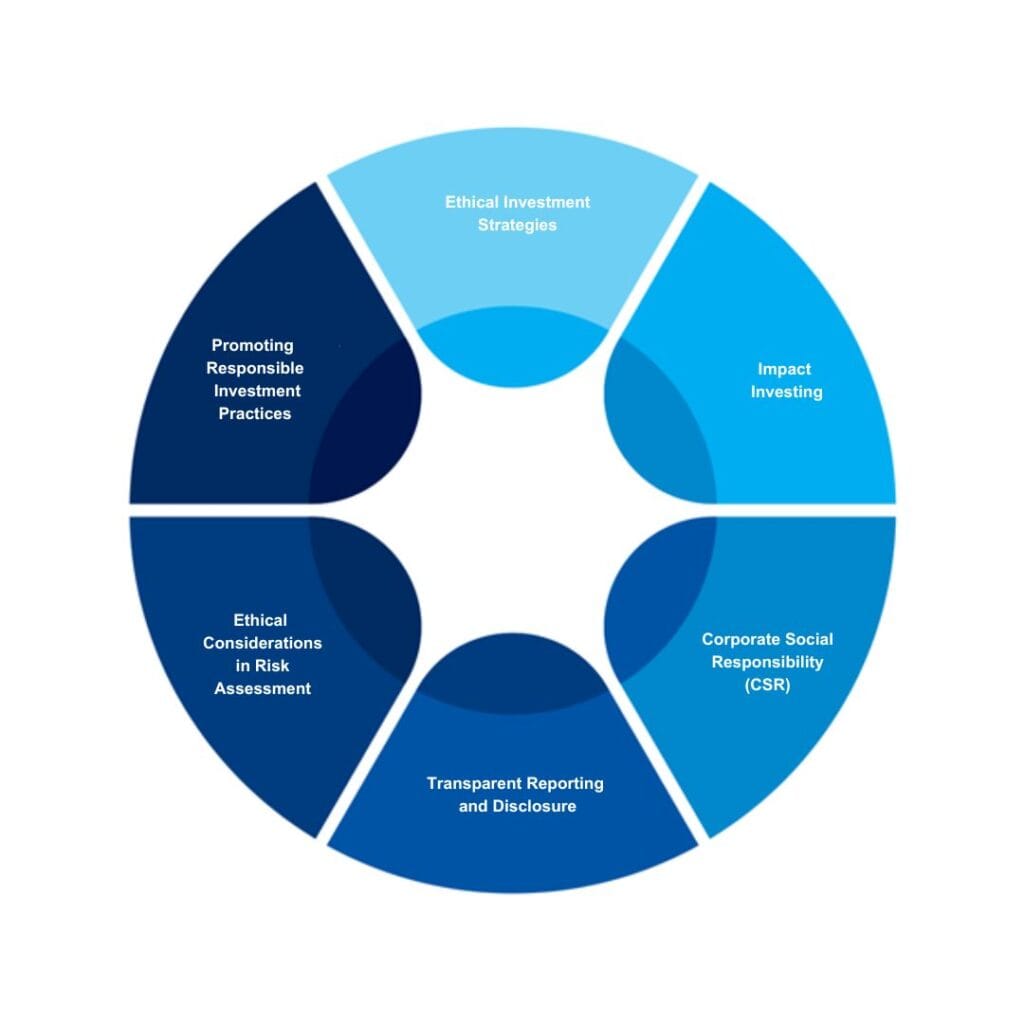
- Corporate Social Responsibility (CSR)
Corporate Social Responsibility refers to the commitment of businesses to operate in a socially and environmentally responsible manner. Ethical finance encourages companies to integrate CSR principles into their core operations, including responsible supply chain management, employee welfare, and environmental stewardship. By adopting CSR practices, organizations contribute positively to the communities in which they operate, thereby promoting responsible investment practices.
- Transparent Reporting and Disclosure
Transparency is a fundamental aspect of ethical finance. Financial institutions and companies are encouraged to provide clear and comprehensive reporting on their financial performance, risk exposure, and ESG practices. Transparent reporting allows investors to make informed decisions based on accurate information, fostering trust and accountability within the financial sector.
- Ethical Considerations in Risk Assessment
Ethics should also be integrated into risk assessment processes in finance. This involves evaluating potential risks associated with investments, such as environmental risks, human rights violations, and governance issues. By considering these ethical factors, investors can make more responsible decisions that mitigate negative impacts and contribute to long-term sustainable development.
Benefits of Ethical Finance
- Trust and Reputation
Integrating ethics into finance builds trust among investors, customers, and the general public. When financial institutions and professionals prioritize ethical behavior, it enhances their reputation and credibility. This trust is crucial for the stability and growth of the financial sector, as well as attracting responsible investors.
- Sustainable Growth
Ethical finance promotes sustainable growth by encouraging investments in environmentally friendly and socially responsible projects. By allocating capital to initiatives that align with ESG criteria, investors contribute to the development of sustainable industries and practices. This, in turn, fosters long-term economic stability and protects the environment for future generations.
- Positive Social Impact
Ethical finance provides opportunities to make a positive social impact. By investing in projects that address social challenges, such as renewable energy, affordable housing, and education, investors contribute to the betterment of society. This aligns financial goals with the broader goal of creating a more equitable and sustainable world.
- Risk Mitigation
Ethical finance practices help mitigate risks associated with unethical behavior. By incorporating ESG factors into investment decisions, investors can identify potential risks and avoid companies involved in activities that may harm the environment, violate human rights, or engage in fraudulent practices. This risk-aware approach protects investments and minimizes reputational damage.
Conclusion
The role of ethics in finance is vital for promoting responsible investment practices. By embracing ethical considerations, financial institutions, professionals, and investors can contribute to a sustainable and equitable world. Ethical finance encourages transparent reporting, responsible investment strategies, and corporate social responsibility, fostering trust, sustainable growth, and positive social impact. Embracing ethical finance is not only the right thing to do but also makes financial sense in the long run.
Q1. How do ethics impact financial performance?
Ethics impact financial performance by enhancing trust, attracting responsible investors, and mitigating risks associated with unethical behavior. When companies and financial institutions prioritize ethical practices, they build a positive reputation, which can lead to increased investor confidence, sustainable growth, and long-term profitability.
Q2. What are the ethics in finance and investment?
Ethics in finance and investment encompass the principles and values that guide financial professionals and investors in their decision-making processes. It involves a commitment to transparency, fairness, accountability, and considering the well-being of stakeholders while making financial decisions.
Q3. What is ethical approach in finance?
An ethical approach in finance refers to integrating principles and values that prioritize transparency, fairness, accountability, and the well-being of stakeholders into financial decision-making processes, promoting responsible and sustainable investment practices.
Q4. What is an ethical and socially responsible investment?
Ethical and socially responsible investment refers to the practice of investing in companies and projects that align with one’s ethical values and promote positive social and environmental impact. It involves considering factors such as environmental sustainability, social justice, and responsible governance when making investment decisions.
Q5. What are examples of social responsible investment?
Examples of socially responsible investments include investing in renewable energy projects to combat climate change, supporting companies that promote gender equality and diversity, and investing in organizations that prioritize fair labor practices and community development.

Muskan Bansal is a finance enthusiast with a keen interest in financial news and sports. With a passion for staying up-to-date with the latest developments in the world of finance, Muskan combines a strong analytical mindset with a love for sports to gain a well-rounded perspective. Equipped with a deep understanding of both domains, Muskan seeks to bridge the gap between finance and sports, exploring the intersection of these two diverse fields.