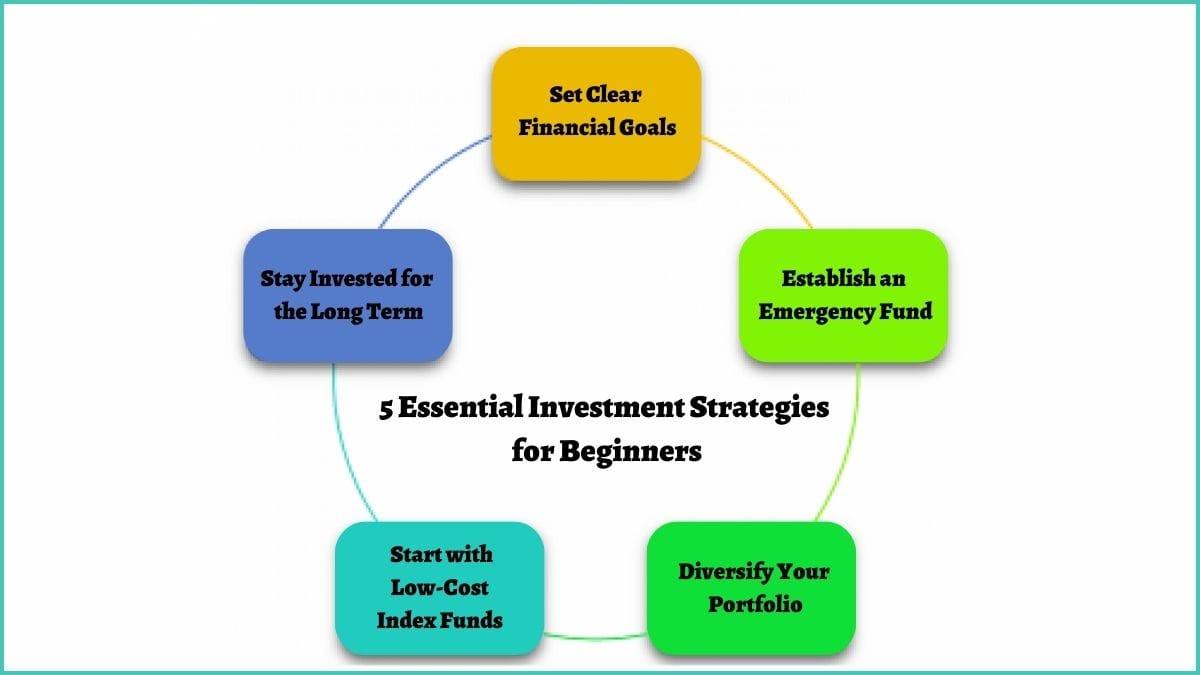
5 Essential Investment Strategies for Beginners
Introduction:
Investing can be a powerful tool for building wealth and achieving financial goals. However, for beginners, the investing world can seem complex and overwhelming. The good news is that there are essential investment strategies for beginners that can provide a strong foundation to navigate the investment landscape with confidence. By understanding these strategies and implementing them effectively, beginners can set themselves on the path to long-term financial success.
In this comprehensive guide, we will explore the five essential investment strategies for beginners. We will break down each strategy, explain its importance, and provide practical tips and examples to help you grasp the concepts. Whether you are just starting your investment journey or looking to refine your approach, this guide will equip you with the knowledge and tools to make informed investment decisions.
From setting financial goals to diversifying your portfolio, we will cover all the essential aspects of building solid investment strategies for beginners. We will delve into the benefits of establishing an emergency fund, the value of investing in low-cost index funds, and the power of staying invested for the long term. By understanding these strategies and their impact, you will be better prepared to make sound investment decisions and achieve your financial goals.
So, if you are ready to take control of your financial future and embark on your investment journey, let’s dive into the five essential investment strategies for beginners.
1. Set Clear Financial Goals:
To effectively invest, it’s important to have clear financial goals in mind. These goals will guide your investment decisions and help you stay focused. For example, if your goal is to save for retirement, you can choose investments that provide growth and income over the long term. On the other hand, if you’re saving for a short-term goal like purchasing a home, you may opt for more conservative investments with lower risk.

Image Source: raelipskie.com
Example: Let’s say your financial goal is to retire comfortably in 30 years with a target savings of $1 million. This goal will influence your Investment Strategies for Beginners, leading you to invest in a diversified portfolio of stocks, bonds, and mutual funds with a focus on long-term growth.
2. Establish an Emergency Fund:
Before diving into investments, it’s crucial to have an emergency fund in place. An emergency fund is a separate account that holds enough money to cover unexpected expenses or financial emergencies. This fund acts as a safety net, ensuring that you don’t have to liquidate your investments in times of crisis.

Image Source: dollarsandsense.sg
Example: Aim to save at least three to six months’ worth of living expenses in your emergency fund. This will provide a buffer in case of job loss, medical emergencies, or unexpected home repairs.
3. Diversify Your Portfolio:
Diversification is a fundamental principle of investing. It involves spreading your investments across different asset classes, sectors, and geographical regions. By diversifying, you reduce the risk of any single investment negatively impacting your portfolio.

Image Source: www.icicipruamc.com
Example: Instead of investing all your money in one stock, consider spreading your investments across stocks, bonds, real estate, and alternative investments like commodities or index funds. This diversification helps mitigate risk because different assets tend to perform differently under various market conditions.
4. Start with Low-Cost Index Funds:
For beginners, low-cost index funds can be an excellent starting point. These funds track a specific market index, such as the S&P 500, and provide broad exposure to the market. Since they passively replicate the index, they have lower fees compared to actively managed funds.

Image Source: tradebrains.in
Example: Investing in a low-cost S&P 500 index fund allows you to participate in the performance of the 500 largest companies in the US stock market. This approach provides diversification and minimizes the risk associated with investing in individual stocks.
5. Stay Invested for the Long Term:
One of the key principles of successful Investment Strategies for Beginners is to stay invested for the long term. While market fluctuations are inevitable, attempting to time the market and make frequent trades can often lead to suboptimal returns. By maintaining a long-term perspective, you can benefit from the compounding growth potential of your investments.

Image Source: niveshalaya.in
Example: Historically, the stock market has shown an upward trajectory over the long term. Staying invested and not reacting to short-term market volatility allows your investments to grow and recover from temporary downturns.
Conclusion:
In conclusion, mastering the five essential investment strategies for beginners is crucial for long-term financial success. By setting clear financial goals, establishing an emergency fund, diversifying your portfolio, starting with low-cost index funds, and staying invested for the long term, you can navigate the investment landscape with confidence. To illustrate the power of these strategies, let’s consider an example:
Imagine you are a beginner investor who sets a financial goal of saving for a down payment on a house in 10 years. You diligently contribute to your emergency fund and allocate your investments across various asset classes, including stocks, bonds, and real estate investment trusts (REITs). By investing in low-cost index funds that track the performance of the overall market, you benefit from broad market growth and minimize expenses.
As you stay invested for the long term, you experience the compounding effect of your investments. Over the 10 years, despite short-term market fluctuations, your diversified portfolio steadily grows. By the time you reach your goal, your investments have generated substantial returns, enabling you to achieve your dream of homeownership.
This example highlights the importance of implementing the five essential Investment Strategies for Beginners. It demonstrates the potential for long-term wealth accumulation, financial security, and the realization of your goals.
Remember, investing is a journey that requires patience, discipline, and continuous learning. As you gain experience and confidence, you can explore more advanced Investment Strategies for Beginners. But always remember the foundation provided by these essential strategies, as they form the bedrock of a successful investment approach.
By following these principles, you can navigate the investment landscape with greater confidence, make informed decisions, and work towards achieving your financial aspirations. So, embark on your investment journey with a solid understanding of these essential strategies and watch your wealth grow over time.
You can also read: 7 Keys Factors Influencing Stock Market Volatility
FAQ’s
Q1. What are the 7 ways to invest?
Here are the 7 ways to invest:
Stocks, Mutual funds, Exchange-Traded Funds (ETFs), Bonds, Commodities, Real Estate, and Cryptocurrencies.
Q2. How do I invest smartly?
Investing smartly requires careful consideration and a strategic approach. One key aspect is setting clear financial goals that define the purpose of your investments, such as saving for retirement, funding education, or achieving specific milestones. Additionally, diversifying your portfolio across different asset classes is crucial to minimize risk and optimize returns.
Q3. What is the fastest way to invest?
The fastest way to invest depends on the individual’s financial goals, risk tolerance, and level of knowledge or experience in investing. Here are a few options to consider:
1. Robo-Advisors
2. Index Funds or ETFs
3. Online Brokerages
4. Target-Date Funds.
Q4. How to invest with little money?
Investing with little money may seem challenging, but it’s absolutely possible to get started even with a small amount. Here are some strategies to consider:
1. Start with a budget: Assess your finances and create a budget to determine how much you can comfortably invest.
2. Begin with a micro-investment app: Micro-investment apps allow you to invest small amounts of money, often as little as a few dollars, in a diversified portfolio.
3. Take advantage of employer-sponsored retirement plans: If your employer offers a 401(k) or similar retirement plan, contribute to it, especially if there is an employer match.
4. Consider fractional shares: Fractional shares allow you to invest in stocks or exchange-traded funds (ETFs) with as little as a few dollars.
Q5. Where do I invest my money?
When it comes to investing your money, there are several options to consider based on your financial goals, risk tolerance, and time horizon. Here are some potential investment avenues:
Stock Market, Mutual Funds, Bonds, Retirement Accounts, Real Estate, Index Funds, and Exchange.