5 Essential Investment Strategies for Beginners
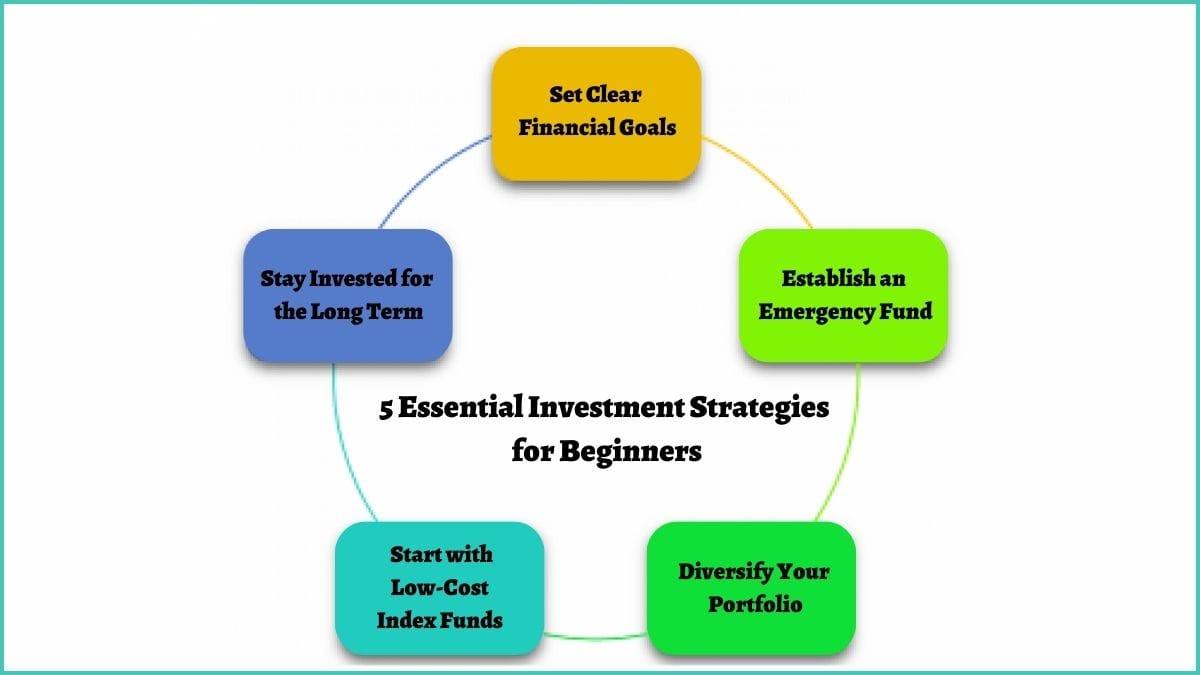
Investment strategies for beginners

Introduction: Investing can be a powerful tool for building wealth and achieving financial goals. However, for beginners, the investing world can seem complex and overwhelming. The good news is that there are essential investment strategies for beginners that can provide a strong foundation to navigate the investment landscape with confidence. By understanding these strategies and implementing them effectively, beginners can set themselves on the path to long-term financial success. In this comprehensive guide, we will explore the five essential investment strategies for beginners. We will break down each strategy, explain its importance, and provide practical tips and examples to help you grasp the concepts. Whether you are just starting your investment journey or looking to refine your approach, this guide will equip you with the knowledge and tools to make informed investment decisions. From setting financial goals to diversifying your portfolio, we will cover all the essential aspects of building solid investment strategies for beginners. We will delve into the benefits of establishing an emergency fund, the value of investing in low-cost index funds, and the power of staying invested for the long term. By understanding these strategies and their impact, you will be better prepared to make sound investment decisions and achieve your financial goals. So, if you are ready to take control of your financial future and embark on your investment journey, let’s dive into the five essential investment strategies for beginners. 1. Set Clear Financial Goals: To effectively invest, it’s important to have clear financial goals in mind. These goals will guide your investment decisions and help you stay focused. For example, if your goal is to save for retirement, you can choose investments that provide growth and income over the long term. On the other hand, if you’re saving for a short-term goal like purchasing a home, you may opt for more conservative investments with lower risk. Image Source: raelipskie.com Example: Let’s say your financial goal is to retire comfortably in 30 years with a target savings of $1 million. This goal will influence your Investment Strategies for Beginners, leading you to invest in a diversified portfolio of stocks, bonds, and mutual funds with a focus on long-term growth. 2. Establish an Emergency Fund: Before diving into investments, it’s crucial to have an emergency fund in place. An emergency fund is a separate account that holds enough money to cover unexpected expenses or financial emergencies. This fund acts as a safety net, ensuring that you don’t have to liquidate your investments in times of crisis. Image Source: dollarsandsense.sg Example: Aim to save at least three to six months’ worth of living expenses in your emergency fund. This will provide a buffer in case of job loss, medical emergencies, or unexpected home repairs. 3. Diversify Your Portfolio: Diversification is a fundamental principle of investing. It involves spreading your investments across different asset classes, sectors, and geographical regions. By diversifying, you reduce the risk of any single investment negatively impacting your portfolio. Image Source: www.icicipruamc.com Example: Instead of investing all your money in one stock, consider spreading your investments across stocks, bonds, real estate, and alternative investments like commodities or index funds. This diversification helps mitigate risk because different assets tend to perform differently under various market conditions. 4. Start with Low-Cost Index Funds: For beginners, low-cost index funds can be an excellent starting point. These funds track a specific market index, such as the S&P 500, and provide broad exposure to the market. Since they passively replicate the index, they have lower fees compared to actively managed funds. Image Source: tradebrains.in Example: Investing in a low-cost S&P 500 index fund allows you to participate in the performance of the 500 largest companies in the US stock market. This approach provides diversification and minimizes the risk associated with investing in individual stocks. 5. Stay Invested for the Long Term: One of the key principles of successful Investment Strategies for Beginners is to stay invested for the long term. While market fluctuations are inevitable, attempting to time the market and make frequent trades can often lead to suboptimal returns. By maintaining a long-term perspective, you can benefit from the compounding growth potential of your investments. Image Source: niveshalaya.in Example: Historically, the stock market has shown an upward trajectory over the long term. Staying invested and not reacting to short-term market volatility allows your investments to grow and recover from temporary downturns. Conclusion: In conclusion, mastering the five essential investment strategies for beginners is crucial for long-term financial success. By setting clear financial goals, establishing an emergency fund, diversifying your portfolio, starting with low-cost index funds, and staying invested for the long term, you can navigate the investment landscape with confidence. To illustrate the power of these strategies, let’s consider an example: Imagine you are a beginner investor who sets a financial goal of saving for a down payment on a house in 10 years. You diligently contribute to your emergency fund and allocate your investments across various asset classes, including stocks, bonds, and real estate investment trusts (REITs). By investing in low-cost index funds that track the performance of the overall market, you benefit from broad market growth and minimize expenses. As you stay invested for the long term, you experience the compounding effect of your investments. Over the 10 years, despite short-term market fluctuations, your diversified portfolio steadily grows. By the time you reach your goal, your investments have generated substantial returns, enabling you to achieve your dream of homeownership. This example highlights the importance of implementing the five essential Investment Strategies for Beginners. It demonstrates the potential for long-term wealth accumulation, financial security, and the realization of your goals. Remember, investing is a journey that requires patience, discipline, and continuous learning. As you gain experience and confidence, you can explore more advanced Investment Strategies for Beginners. But always remember the foundation provided by these essential strategies, as they form the bedrock of a successful investment approach. By following these principles, you can navigate the investment landscape … Read more


7 Key Factors Influencing Stock Market Volatility

Stock market volatility

Introduction: Stock market volatility refers to the rapid and significant price fluctuations of stocks within a specific period. Understanding the factors that influence stock market volatility is crucial for investors, traders, and policymakers. In this article, we will discuss seven key factors that contribute to stock market volatility, providing a comprehensive understanding of each factor’s impact and implications. 1. Economic Factors: Economic factors play a significant role in stock market volatility. Factors such as GDP growth, inflation, interest rates, and employment data can significantly impact investor sentiment and market expectations. Image Source: storage.ning.com For example, positive economic indicators may lead to bullish sentiments and lower volatility, while negative economic data can trigger market downturns and heightened volatility. 2. Geopolitical Events: Geopolitical events, including wars, political instability, trade disputes, and international conflicts, can create uncertainty and impact stock market volatility. Image Source: ngssuper.com.au These events introduce unpredictability and can influence investor sentiment, leading to market fluctuations. Major geopolitical developments often cause sharp market reactions, as investors assess the potential implications for global trade, economic stability, and corporate earnings. 3. Corporate Earnings: Corporate earnings reports and forecasts are closely monitored by investors and can significantly impact stock market volatility. Positive earnings surprises or strong guidance can drive stock prices higher, while disappointing earnings or downward revisions can lead to sharp declines. Image Source: pix4free.org Earnings announcements, particularly for widely followed companies or key sectors, can trigger volatility in both individual stocks and broader market indices. 4. Market Sentiment and Investor Behavior: Market sentiment and investor behavior play a crucial role in stock market volatility. Investor emotions, such as fear, greed, and uncertainty, can drive buying or selling decisions, leading to market swings. Image Source: ehnerinvestments.com Sentiment indicators, such as investor surveys, market breadth, and volatility indexes like the VIX, provide insights into investor sentiment and can be used to assess potential market volatility. 5. Financial and Banking Sector: The health of the financial and banking sector can significantly impact stock market volatility. Banking crises, credit market disruptions, or concerns over financial stability can trigger widespread market sell-offs and increased volatility. Image source: customerthink.com Regulatory changes, central bank policies, and financial sector performance are closely watched by investors to gauge potential market risks. 6. Technological Advances and Innovation: Technological advances and innovation can influence stock market volatility, particularly in sectors such as technology, biotechnology, and renewable energy. Image Source: ww2.eagle.org Breakthrough developments, product launches, or disruptive technologies can lead to significant price movements in individual stocks or entire sectors. Investors closely follow technological advancements and their potential impact on market dynamics. 7. Global Market Interconnections: Global market interconnections and cross-border influences contribute to stock market volatility. Interactions between different markets, including international trade, currency exchange rates, and capital flows, can amplify volatility. Image Source: ars.els-cdn.com Events in one market can quickly transmit to others, leading to contagion effects and increased volatility across global markets. Conclusion: Stock market volatility is influenced by a complex interplay of economic, geopolitical, investor sentiment, and sector-specific factors. Understanding these key factors provides valuable insights into market dynamics and helps investors make informed decisions. By staying informed about these factors and regularly monitoring market conditions, investors can navigate volatility and potentially capitalize on market opportunities while managing risks. You can read also: Solid Emergency Fund: 9 Steps to Building One FAQ’s Aditya JaiswalAditya Jaiswal is a versatile writer with a keen interest in finance, games, and sports. With a passion for exploring the world of numbers and a flair for storytelling, he brings a unique perspective to his writing. Aditya’s work is informed by his analytical mind and his ability to break down complex ideas into simple concepts that anyone can understand.

The Top 5 Investment Strategies for Long-Term Growth

Investment Strategies for Long-Term Growth

Introduction: Investing is a powerful tool for building wealth and achieving long-term financial goals. However, navigating the world of investments can be daunting, especially for beginners. In this article, we will discuss the top five investment strategies for long-term growth. These strategies aim to help individuals make informed decisions, manage risk, and maximize returns over an extended period. 1 Diversification(Investment strategies for long-term growth): Diversification is a fundamental investment strategy that involves spreading your investment portfolio across various asset classes, industries, and geographic regions. By diversifying, you reduce the risk of putting all your eggs in one basket. Different asset classes, such as stocks, bonds, real estate, and commodities, have varying risk-return profiles, and they tend to perform differently in different market conditions. Image Source: media.licdn.com Diversification helps cushion your portfolio against volatility and can increase the likelihood of positive returns over the long term. By diversifying your investments, you ensure that the potential losses in one area are balanced by gains in another, providing a more stable foundation for growth. 2 Dollar-Cost Averaging (Investment strategies for long-term growth): Dollar-cost averaging is an investment strategy that involves investing a fixed amount of money at regular intervals, regardless of the market price. This strategy takes advantage of market fluctuations by automatically buying more shares when prices are low and fewer shares when prices are high. Image Source: tokenist.com Dollar-cost averaging reduces the impact of short-term market volatility and eliminates the need to time the market. It allows investors to accumulate more shares over time at an average cost, potentially benefiting for Investment strategies for long-term growth. This strategy is particularly suitable for individuals who prefer a disciplined approach and want to mitigate the risks associated with market timing. 3 Buy and Hold (Investment strategies for long-term growth): The buy and hold strategy involves investing in quality assets with the intention of holding them for an extended period, often years or even decades. It requires a long-term perspective and the ability to withstand short-term market fluctuations. Image Source: investopaper.com By adopting a buy and hold approach, investors can benefit from the compounding effect of Investment strategies for long-term growth. This strategy allows for reduced transaction costs and capital gains taxes compared to frequent trading. It also eliminates the stress of trying to predict short-term market movements. 4 Value Investing (Investment strategies for long-term growth): Value investing is a strategy popularized by legendary investor Benjamin Graham and his disciple Warren Buffett. It involves identifying undervalued assets and investing in them with the belief that their intrinsic value will be recognized over time. Image Source: tradebrains.in Value investors look for stocks or other assets that are trading at prices below their intrinsic worth, often based on financial analysis, company fundamentals, and market conditions. By investing in undervalued assets, value investors aim to achieve above-average returns when the market eventually recognizes their true value. 5 Growth Investing (Investment strategies for long-term growth): Growth investing focuses on identifying companies or sectors that are expected to experience significant growth in the future. This strategy involves investing in assets that may have higher valuations but offer the potential for substantial capital appreciation. Image Source: fxmedia.s3.amazonaws.com Growth investors typically seek out companies with strong earnings growth, innovative products or services, expanding market share, and robust business models. They are willing to pay a premium for these growth prospects, with the expectation that the company’s value will increase over time. Conclusion: Investment strategies for long-term growth requires patience, discipline, and a well-thought-out strategy. By diversifying your portfolio, adopting dollar-cost averaging, embracing a buy and hold mentality, considering value investing opportunities, and exploring growth-oriented assets, you can position yourself for potential long-term success in the investment world. Remember that investment decisions should align with your financial goals, risk tolerance, and time horizon. It is always advisable to do thorough research, seek professional advice when needed, and stay informed about market trends and economic conditions. By following these top five investment strategies, you can set yourself on the path to long-term growth and financial prosperity. You can read also: Steps to Creating a Successful Retirement Plan FAQs Aditya JaiswalAditya Jaiswal is a versatile writer with a keen interest in finance, games, and sports. With a passion for exploring the world of numbers and a flair for storytelling, he brings a unique perspective to his writing. Aditya’s work is informed by his analytical mind and his ability to break down complex ideas into simple concepts that anyone can understand.

The Rise of Robo-Advisors: How AI is Transforming Investment Management

Robo-Advisors

Introduction: Robo-advisors have emerged as a powerful force in the world of investment management, harnessing the capabilities of artificial intelligence (AI) to revolutionize how individuals and institutions manage their finances. This article explores the rise of robo-advisors and their transformative impact on the investment landscape. We will delve into the benefits they offer, their underlying AI technology, and how they are reshaping the way people approach investing. Discover the exciting world of robo-advisors and learn how AI is democratizing investment management for a wider audience. What are Robo-Advisors? Robo-advisors are digital platforms that leverage AI algorithms to provide automated investment advice and portfolio management services. They use sophisticated algorithms and mathematical models to assess an individual’s risk tolerance, financial goals, and time horizon. Based on this information, they recommend suitable investment strategies and create diversified portfolios. Image Source: cdn.leadpilot.io How Robo-Advisors Work? Robo-advisors utilize AI algorithms to streamline the investment process. Investors typically start by answering a series of questions about their financial situation, investment goals, and risk preferences. The robo-advisor then employs these inputs to create a personalized investment plan. The algorithms consider factors such as asset allocation, diversification, and tax efficiency while constructing the portfolio. Image Source: vamsitalkstech.com Once the portfolio is established, robo-advisors continually monitor the market and the client’s financial situation. They automatically rebalance the portfolio to maintain the desired asset allocation and make adjustments as per changing market conditions. Some robo-advisors even offer tax-loss harvesting, a technique that aims to minimize taxes by selling investments at a loss to offset gains. Advantages of Robo-Advisors a. Accessibility: Robo-advisors have democratized investment management by providing affordable access to professional investment services. They have lowered the barriers to entry, allowing individuals with limited capital to invest in diversified portfolios that were once only available to wealthier investors. b. Cost-Effectiveness: Traditional investment management services often involve high fees, making them inaccessible for many investors. Robo-advisors, on the other hand, typically charge lower fees due to their automated nature. This cost-effectiveness ensures that investors retain a higher proportion of their investment returns. c. Personalized Portfolios: Robo-advisors offer personalized investment portfolios tailored to individual needs and risk profiles. By analyzing vast amounts of data and using sophisticated algorithms, they can create portfolios that align with specific investment objectives, such as long-term growth, income generation, or capital preservation. d. Transparency: Robo-advisors provide transparency in their investment strategies and fees, ensuring that investors have a clear understanding of how their money is being managed. The algorithms used by robo-advisors are often rule-based, eliminating human bias and emotional decision-making. e. Time Efficiency: Robo-advisors automate investment processes, saving investors significant time and effort. Clients can easily access their investment accounts, monitor performance, and make changes through user-friendly digital platforms. AI Technology behind Robo-Advisors Robo-advisors rely on AI technology to process vast amounts of financial data, generate investment recommendations, and manage portfolios. Machine learning algorithms power these platforms, enabling them to learn and improve from historical data and market trends. AI algorithms analyze various factors, including historical asset performance, economic indicators, and investor behavior, to make informed investment decisions. Natural language processing (NLP) capabilities allow to understand and interpret unstructured data from news articles, social media, and financial reports, enabling them to adjust portfolios based on relevant market information. Additionally, AI-powered risk assessment models help robo-advisor determine an individual’s risk tolerance by considering multiple variables, such as age, income, investment goals, and time horizon. This ensures that the investment strategy aligns with the investor’s risk preferences. The Future of Robo-Advisors Robo advisors are likely to continue evolving as AI technology advances. As AI algorithms become more sophisticated will enhance their ability to analyze complex market dynamics and make more accurate predictions. This will lead to further personalized investment recommendations and improved risk management strategies. Image Source: agendainvest.com Moreover, robo advisors may integrate other emerging technologies, such as blockchain, to enhance security, transparency, and efficiency in investment transactions. They may also incorporate features like goal-based planning and financial education to provide comprehensive financial services to users. Conclusion Robo advisors have ushered in a new era of investment management, leveraging AI technology to provide accessible, cost-effective, and personalized investment solutions. These platforms have democratized investing by making professional investment advice available to a wider audience. With their transparent approach, robust algorithms, and time-saving benefits are transforming the way people approach investing. As AI continues to advance, the future of robo advisors looks promising, promising further innovation and improved investment outcomes for individuals and institutions alike. FAQs Also read How to Get a Fast Loan From OneMain Financial  Muskan BansalMuskan Bansal is a finance enthusiast with a keen interest in financial news and sports. With a passion for staying up-to-date with the latest developments in the world of finance, Muskan combines a strong analytical mindset with a love for sports to gain a well-rounded perspective. Equipped with a deep understanding of both domains, Muskan seeks to bridge the gap between finance and sports, exploring the intersection of these two diverse fields.

The Role of Ethics in Finance: Promoting Responsible Investment Practices

ethics in finance

Introduction In today’s interconnected and globalized world, finance plays a crucial role in shaping economies and societies. However, with great power comes great responsibility. The ethical dimension of finance cannot be overlooked, as it has the potential to impact individuals, communities, and the environment. This article explores the significance of ethics in finance and how it promotes responsible investment practices. Understanding Ethics in Finance Ethics in finance refers to the principles and values that guide financial professionals and institutions in their decision-making processes. It involves a commitment to transparency, fairness, accountability, and the well-being of stakeholders. When ethics are integrated into financial practices, it fosters trust, ensures sustainable growth, and minimizes risks associated with unethical behavior. Image Source: marketing91.com Promoting Responsible Investment Practices Ethical investment, also known as socially responsible investment (SRI) or sustainable investment, is a practice that aligns financial goals with ethical values. It involves investing in companies and projects that adhere to environmental, social, and governance (ESG) criteria. By integrating ESG factors into investment decisions, ethical investors can support businesses that prioritize sustainability, social justice, and responsible governance. Impact investing goes beyond financial returns; it seeks to generate positive social and environmental impact alongside financial gains. Investors actively allocate capital to projects and enterprises that address societal challenges such as poverty, climate change, and healthcare access. This approach allows individuals and institutions to contribute to the betterment of society while earning financial returns, thus aligning investment goals with ethical considerations. Corporate Social Responsibility refers to the commitment of businesses to operate in a socially and environmentally responsible manner. Ethical finance encourages companies to integrate CSR principles into their core operations, including responsible supply chain management, employee welfare, and environmental stewardship. By adopting CSR practices, organizations contribute positively to the communities in which they operate, thereby promoting responsible investment practices. Transparency is a fundamental aspect of ethical finance. Financial institutions and companies are encouraged to provide clear and comprehensive reporting on their financial performance, risk exposure, and ESG practices. Transparent reporting allows investors to make informed decisions based on accurate information, fostering trust and accountability within the financial sector. Ethics should also be integrated into risk assessment processes in finance. This involves evaluating potential risks associated with investments, such as environmental risks, human rights violations, and governance issues. By considering these ethical factors, investors can make more responsible decisions that mitigate negative impacts and contribute to long-term sustainable development. Benefits of Ethical Finance Integrating ethics into finance builds trust among investors, customers, and the general public. When financial institutions and professionals prioritize ethical behavior, it enhances their reputation and credibility. This trust is crucial for the stability and growth of the financial sector, as well as attracting responsible investors. Ethical finance promotes sustainable growth by encouraging investments in environmentally friendly and socially responsible projects. By allocating capital to initiatives that align with ESG criteria, investors contribute to the development of sustainable industries and practices. This, in turn, fosters long-term economic stability and protects the environment for future generations. Ethical finance provides opportunities to make a positive social impact. By investing in projects that address social challenges, such as renewable energy, affordable housing, and education, investors contribute to the betterment of society. This aligns financial goals with the broader goal of creating a more equitable and sustainable world. Ethical finance practices help mitigate risks associated with unethical behavior. By incorporating ESG factors into investment decisions, investors can identify potential risks and avoid companies involved in activities that may harm the environment, violate human rights, or engage in fraudulent practices. This risk-aware approach protects investments and minimizes reputational damage. Conclusion The role of ethics in finance is vital for promoting responsible investment practices. By embracing ethical considerations, financial institutions, professionals, and investors can contribute to a sustainable and equitable world. Ethical finance encourages transparent reporting, responsible investment strategies, and corporate social responsibility, fostering trust, sustainable growth, and positive social impact. Embracing ethical finance is not only the right thing to do but also makes financial sense in the long run. Muskan BansalMuskan Bansal is a finance enthusiast with a keen interest in financial news and sports. With a passion for staying up-to-date with the latest developments in the world of finance, Muskan combines a strong analytical mindset with a love for sports to gain a well-rounded perspective. Equipped with a deep understanding of both domains, Muskan seeks to bridge the gap between finance and sports, exploring the intersection of these two diverse fields.

Impact Investing: Combining Financial Returns with Social and Environmental Impact

Financial Returns with Social and Environmental

Impact investing is an approach that goes beyond traditional investing by considering financial returns with social and environmental impact of investments. It aims to generate positive change while still achieving financial goals. In this article, we will explore the concept of impact investing, its rise in popularity, its benefits, different types of impact investments, measurement of impact, challenges, and risks associated with impact investing, as well as examples and guidance on getting started in this field. Introduction In a world facing numerous social and environmental challenges, impact investing offers a compelling solution. Impact investing involves deploying capital in a way that not only generates financial returns but also creates a positive impact on society and the environment. It is an investment strategy that seeks to align financial goals with social and environmental objectives. Understanding Impact Investing Impact investing goes beyond traditional investing by incorporating social and environmental considerations into the investment process. Unlike purely profit-driven investments, impact investing takes into account the broader consequences of investments on people and the planet. It aims to address pressing issues such as poverty, inequality, climate change, and access to education and healthcare. The Rise of Impact Investing Over the past decade, impact investing has gained significant traction. More individuals and institutions are recognizing the importance of investing in a way that aligns with their values and contributes to positive change. The global impact investing market has witnessed remarkable growth, indicating a shift towards a more sustainable and responsible investment approach. Benefits of Impact Investing Impact investing offers a range of benefits to investors. It provides an opportunity to achieve financial returns while making a difference in society. By investing in companies and organizations that prioritize social and environmental impact, investors can contribute to the creation of a more equitable and sustainable world. Impact investing also allows for risk mitigation through diversification across various sectors and asset classes. Types of Impact Investments There are several types of impact investments available to individuals and institutions. Socially responsible investing (SRI) focuses on companies that exhibit responsible business practices. Environmental, social, and governance (ESG) investing takes into account environmental and social factors alongside financial considerations. Community development investing targets underserved communities, while sustainable agriculture and clean energy investments address specific environmental challenges. Image Source: static.theceomagazine.net Measuring Impact on Financial Returns with Social and Environmental Measuring the impact of investments is crucial to ensure accountability and transparency. Various metrics and tools are used to evaluate the social and environmental performance of impact investments. Social and environmental performance indicators help investors assess the effectiveness of their investments in achieving desired outcomes. Third-party certifications and standards provide additional validation and assurance. Challenges and Risks (Financial Returns with Social and Environmental) While impact investing presents numerous opportunities, it also comes with challenges and risks. The lack of standardized metrics and reporting frameworks makes it difficult to compare and assess the impact of different investments. Balancing financial returns with impact objectives can be a complex task. Additionally, managing risk in impact investing requires careful evaluation and due diligence. Examples of Impact Investing There are numerous examples of successful impact investments across various sectors. These range from healthcare and education initiatives to renewable energy projects and sustainable agriculture. Case studies highlight the positive impact that well-executed investments can have on communities, the environment, and the financial bottom line. Getting Started with Impact Investing To get started with impact investing, it is important to identify personal values and goals. Researching impact investment opportunities and understanding the various sectors and asset classes available is crucial. Working with financial advisors and experts can provide valuable guidance in selecting suitable investments that align with individual objectives. Impact Investing and Corporate Social Responsibility Businesses also play a crucial role in impact investing. Integrating impact investing into corporate strategies allows companies to create shared value and contribute to sustainable development. By incorporating social and environmental considerations into their operations, businesses can drive positive change while achieving financial success. The Future of Impact Investing (Financial Returns with Social and Environmental) The future of impact investing looks promising. Predictions and trends indicate continued growth and maturation of the impact investing industry. Government support and policy changes are expected to further accelerate the adoption of impact investing. Global collaboration and partnerships will be crucial in addressing global challenges and achieving sustainable development goals. Conclusion Impact investing offers a unique opportunity to combine financial returns with social and environmental impact. It is a powerful tool for individuals and institutions to create positive change while achieving their investment objectives. By considering the broader implications of investments, impact investing has the potential to drive sustainable development and address pressing global challenges. Aditya JaiswalAditya Jaiswal is a versatile writer with a keen interest in finance, games, and sports. With a passion for exploring the world of numbers and a flair for storytelling, he brings a unique perspective to his writing. Aditya’s work is informed by his analytical mind and his ability to break down complex ideas into simple concepts that anyone can understand.

The Impact of Inflation on Personal Finances and Investment Strategies

Personal Finances and Investment Strategies

Personal Finances and Investment Strategies Introduction: Inflation is an important economic concept that can have a significant impact on your personal finances and investment strategies. This article aims to explain the effects of inflation in simple terms, helping you understand how it can affect your money and guide you in making informed financial decisions. What is inflation? Inflation refers to the general increase in prices over time, leading to a decrease in the purchasing power of money. When inflation occurs, the same amount of money can buy fewer goods and services than before. For example, if the price of a loaf of bread rises from $2 to $2.50, you would need to spend more money to buy the same item. How does inflation affect Personal Finances and Investment Strategies? How does inflation impact investment strategies(Personal Finances and Investment Strategies)? Image Source: sp.hsbc.com.my Conclusion: Inflation can have a substantial impact on personal finances and investment strategies. By understanding how inflation affects your money and making informed financial decisions, you can mitigate its negative effects and safeguard your financial well-being. Consider diversifying your investments, exploring inflation-protected options, and regularly reviewing your portfolio to navigate the changing economic landscape effectively. You can also read about Income Tax Authorities Powers and Functions Pranjal NathPranjal Nath is a versatile content writer with a passion for exploring and writing about various topics. With expertise in finance, education, science, sports, and travel, he creates engaging and informative content for readers. Through his writing, Pranjal aims to educate and inspire his audience to learn and experience new things.