4 Steps to Creating a Successful Retirement Plan

Successful Retirement Plan

Introduction: Creating a successful retirement plan is essential for ensuring financial security and a comfortable lifestyle during your golden years. Retirement planning involves setting goals, estimating retirement expenses, identifying income sources, and implementing strategies to save and invest for the future. In this article, we will outline four steps to help you create a successful retirement plan that aligns with your aspirations and sets you on the path to a worry-free retirement. Step 1: Define Your Retirement Goals and Timeline The first step in creating a successful retirement plan is to define your retirement goals and timeline. Consider the lifestyle you envision during retirement and the activities you wish to pursue. Will you travel extensively, pursue hobbies, or engage in volunteer work? Understanding your retirement goals will help determine the financial resources you will need to achieve them. Next, establish a timeline for a Successful retirement plan. Do you plan to retire early or continue working into your late 60s? The timeline will influence the strategies you employ and the amount of time you have to save and invest for retirement. Step 2: Estimate Your Retirement Expenses To create a solid Successful retirement plan, it is crucial to estimate your future retirement expenses. Start by evaluating your current spending patterns and identify any expenses that may change during retirement. For example, certain costs like commuting or work-related expenses may decrease, while healthcare or travel expenses may increase. Consider factors such as housing, healthcare, transportation, leisure activities, and other essentials. It may be helpful to use retirement calculators or consult with a financial advisor to ensure a comprehensive assessment of your anticipated expenses. Step 3: Identify and Maximize Income Sources Once you have estimated your retirement expenses, the next step is to identify and maximize your income sources. Start by assessing your current retirement accounts, such as 401(k) plans, IRAs, or pension plans. Understand the benefits and rules associated with each account, including eligibility for employer matches or tax advantages. Social Security benefits also play a significant role in retirement income. Familiarize yourself with the Social Security system, including the factors that determine your benefits and the best time to start receiving them. Consider other potential income sources, such as rental properties, dividends from investments, or part-time work during retirement. By diversifying your income streams, you can enhance your financial security and have multiple sources to rely on during retirement. Step 4: Implement Saving and Investment Strategies The final step is to implement saving and investment strategies to build your retirement nest egg. Start by creating a budget that allows for consistent savings. Aim to save a percentage of your income each month and automate the process by setting up automatic transfers to your retirement accounts. Take advantage of employer-sponsored retirement plans, such as 401(k)s or similar options. Contribute at least enough to maximize any employer match, as this essentially provides free money toward your retirement savings. Consider a diversified investment approach to maximize growth potential and manage risk. Consult with a financial advisor to determine the appropriate asset allocation based on your risk tolerance, goals, and timeline. Regularly review and adjust your investment portfolio as needed to stay on track with your successful retirement plan. Conclusion: Creating a successful retirement plan is a proactive and dynamic process that involves defining goals, estimating expenses, identifying income sources, and implementing saving and investment strategies. By following the four steps outlined in this article, you can lay a solid foundation for a comfortable and secure retirement. Remember, it’s essential to regularly review and adjust your successful retirement plan as circumstances change, ensuring that you stay on track to achieve your retirement goals. Seeking guidance from a financial advisor can provide valuable insights and expertise to optimize your successful retirement plan and make informed decisions along the way. You can read also: The Top 5 Investment Strategies from Long-Term Growth FAQs Muskan BansalMuskan Bansal is a finance enthusiast with a keen interest in financial news and sports. With a passion for staying up-to-date with the latest developments in the world of finance, Muskan combines a strong analytical mindset with a love for sports to gain a well-rounded perspective. Equipped with a deep understanding of both domains, Muskan seeks to bridge the gap between finance and sports, exploring the intersection of these two diverse fields.


7 Effective Strategies for Tax Planning and Optimization

Strategies for Tax Planning and Optimization

Introduction: Strategies for Tax planning and optimization are crucial aspects of personal and business finance. They involve proactive measures to minimize tax liabilities while maximizing financial gains. By strategically managing your income, expenses, and investments, you can legally reduce the amount of tax you owe and keep more of your hard-earned money. In this article, we will discuss seven effective strategies for tax planning and optimization. 1. Understand Your Tax Obligations: Image source: foodmanpa.com To optimize your tax planning, it is essential to have a clear understanding of your tax obligations. Familiarize yourself with the tax laws and regulations applicable to your jurisdiction, including income tax rates, deductions, credits, and deadlines. Stay updated on any changes in tax laws to ensure compliance and take advantage of any new opportunities for tax optimization. 2. Plan Your Income and Expenses Careful income and expense planning can significantly impact your tax liability. Consider deferring income to the following year or accelerating deductions into the current year to minimize your taxable income. For example, if you are self-employed, you may have the flexibility to delay invoicing until the new year, effectively deferring the associated tax liability. Image Source: mymoneycoach.ca Conversely, accelerating deductible expenses, such as business-related purchases or charitable donations, can reduce your taxable income for the current year. By strategically timing your income and expenses, you can optimize your tax position and potentially lower your overall tax bill. 3. Take Advantage of Tax-Advantaged Accounts (Strategies for Tax Planning and Optimization): Tax-adantaged accounts are valuable tools for tax planning and optimization. Examples include retirement accounts like Individual Retirement Accounts (IRAs) and employer-sponsored 401(k) plans. Contributions to these accounts are often tax-deductible or made with pre-tax income, reducing your taxable income for the year. Image Source: investmentu.com Additionally, earnings on investments within these accounts grow tax-free until withdrawal, allowing your savings to compound more efficiently. By contributing to tax-advantaged accounts, you not only save on taxes but also secure a financial cushion for the future. 4. Maximise Deductions and Tax Credits: Deductions and tax credits are powerful tools for reducing your tax liability. Deductions, such as mortgage interest, medical expenses, and student loan interest, directly reduce your taxable income. Identify all available deductions and ensure you claim them accurately to minimize your tax bill. Image Source: mas.net.in Similarly, tax credits provide a dollar-for-dollar reduction in your tax liability. Common tax credits include the Child Tax Credit, Earned Income Tax Credit, and Education Tax Credits. Explore the eligibility criteria for various tax credits and take advantage of those applicable to your situation to optimize your tax savings. 5. Strategize Investments (Tax Planning and Optimization): Investment strategies can play a significant role in Strategies for Tax Planning and Optimization. Understanding the tax implications of different investments can help you make informed decisions. For example, long-term capital gains tax rates are typically lower than short-term rates. By holding investments for more extended periods, you may benefit from the reduced tax burden when you sell them. Image Source: canarahsbclife.com Additionally, consider tax-efficient investment vehicles like index funds or exchange-traded funds (ETFs), which have lower capital gains distributions compared to actively managed funds. By choosing tax-efficient investments, you can minimize taxable gains and potentially optimize your after-tax returns. 6.Consider Tax Loss Harvesting (Strategies for Tax Planning and Optimization): Tax loss harvesting is a strategy that involves selling investments that have experienced a decline in value to offset capital gains. By strategically realizing losses, you can reduce or eliminate the taxable gains generated by other investments. This technique can be particularly useful if you have capital gains from selling appreciated assets. Image Source: wp-asset.groww.in However, it’s essential to be mindful of the “wash sale” rule, which prohibits buying back the same or a substantially identical investment within 30 days of selling it. To avoid this rule, consider reinvesting the proceeds into a similar but not identical investment or waiting for the 30-day period to elapse before repurchasing the asset. 7. Consult with a Tax Professional (Strategies for Tax Planning and Optimization): Image Source: inneedsolutions.com Tax planning can be complex, and tax laws are subject to change. Therefore, consulting with a qualified tax professional is highly recommended. A tax professional can provide personalized advice based on your specific circumstances, ensuring you optimize your Strategies for Tax Planning and Optimization while complying with relevant tax regulations. They can help you identify additional deductions, credits, or incentives that may apply to your situation, maximizing your tax savings. Conclusion: Implementing effective tax planning and optimization strategies can lead to substantial savings and financial benefits. By understanding your tax obligations, planning your income and expenses, leveraging tax-advantaged accounts, maximizing deductions and tax credits, strategizing investments, considering tax loss harvesting, and seeking guidance from a tax professional, you can proactively manage your taxes and keep more of your hard-earned money. Remember to stay informed about tax law changes and adapt your strategies accordingly to ensure ongoing tax optimization. Read this too :The Rise of Robo-Advisors: How AI is Transforming Investment Management FAQs Pranjal NathPranjal Nath is a versatile content writer with a passion for exploring and writing about various topics. With expertise in finance, education, science, sports, and travel, he creates engaging and informative content for readers. Through his writing, Pranjal aims to educate and inspire his audience to learn and experience new things.

The Rise of Robo-Advisors: How AI is Transforming Investment Management

Robo-Advisors

Introduction: Robo-advisors have emerged as a powerful force in the world of investment management, harnessing the capabilities of artificial intelligence (AI) to revolutionize how individuals and institutions manage their finances. This article explores the rise of robo-advisors and their transformative impact on the investment landscape. We will delve into the benefits they offer, their underlying AI technology, and how they are reshaping the way people approach investing. Discover the exciting world of robo-advisors and learn how AI is democratizing investment management for a wider audience. What are Robo-Advisors? Robo-advisors are digital platforms that leverage AI algorithms to provide automated investment advice and portfolio management services. They use sophisticated algorithms and mathematical models to assess an individual’s risk tolerance, financial goals, and time horizon. Based on this information, they recommend suitable investment strategies and create diversified portfolios. Image Source: cdn.leadpilot.io How Robo-Advisors Work? Robo-advisors utilize AI algorithms to streamline the investment process. Investors typically start by answering a series of questions about their financial situation, investment goals, and risk preferences. The robo-advisor then employs these inputs to create a personalized investment plan. The algorithms consider factors such as asset allocation, diversification, and tax efficiency while constructing the portfolio. Image Source: vamsitalkstech.com Once the portfolio is established, robo-advisors continually monitor the market and the client’s financial situation. They automatically rebalance the portfolio to maintain the desired asset allocation and make adjustments as per changing market conditions. Some robo-advisors even offer tax-loss harvesting, a technique that aims to minimize taxes by selling investments at a loss to offset gains. Advantages of Robo-Advisors a. Accessibility: Robo-advisors have democratized investment management by providing affordable access to professional investment services. They have lowered the barriers to entry, allowing individuals with limited capital to invest in diversified portfolios that were once only available to wealthier investors. b. Cost-Effectiveness: Traditional investment management services often involve high fees, making them inaccessible for many investors. Robo-advisors, on the other hand, typically charge lower fees due to their automated nature. This cost-effectiveness ensures that investors retain a higher proportion of their investment returns. c. Personalized Portfolios: Robo-advisors offer personalized investment portfolios tailored to individual needs and risk profiles. By analyzing vast amounts of data and using sophisticated algorithms, they can create portfolios that align with specific investment objectives, such as long-term growth, income generation, or capital preservation. d. Transparency: Robo-advisors provide transparency in their investment strategies and fees, ensuring that investors have a clear understanding of how their money is being managed. The algorithms used by robo-advisors are often rule-based, eliminating human bias and emotional decision-making. e. Time Efficiency: Robo-advisors automate investment processes, saving investors significant time and effort. Clients can easily access their investment accounts, monitor performance, and make changes through user-friendly digital platforms. AI Technology behind Robo-Advisors Robo-advisors rely on AI technology to process vast amounts of financial data, generate investment recommendations, and manage portfolios. Machine learning algorithms power these platforms, enabling them to learn and improve from historical data and market trends. AI algorithms analyze various factors, including historical asset performance, economic indicators, and investor behavior, to make informed investment decisions. Natural language processing (NLP) capabilities allow to understand and interpret unstructured data from news articles, social media, and financial reports, enabling them to adjust portfolios based on relevant market information. Additionally, AI-powered risk assessment models help robo-advisor determine an individual’s risk tolerance by considering multiple variables, such as age, income, investment goals, and time horizon. This ensures that the investment strategy aligns with the investor’s risk preferences. The Future of Robo-Advisors Robo advisors are likely to continue evolving as AI technology advances. As AI algorithms become more sophisticated will enhance their ability to analyze complex market dynamics and make more accurate predictions. This will lead to further personalized investment recommendations and improved risk management strategies. Image Source: agendainvest.com Moreover, robo advisors may integrate other emerging technologies, such as blockchain, to enhance security, transparency, and efficiency in investment transactions. They may also incorporate features like goal-based planning and financial education to provide comprehensive financial services to users. Conclusion Robo advisors have ushered in a new era of investment management, leveraging AI technology to provide accessible, cost-effective, and personalized investment solutions. These platforms have democratized investing by making professional investment advice available to a wider audience. With their transparent approach, robust algorithms, and time-saving benefits are transforming the way people approach investing. As AI continues to advance, the future of robo advisors looks promising, promising further innovation and improved investment outcomes for individuals and institutions alike. FAQs Also read How to Get a Fast Loan From OneMain Financial  Muskan BansalMuskan Bansal is a finance enthusiast with a keen interest in financial news and sports. With a passion for staying up-to-date with the latest developments in the world of finance, Muskan combines a strong analytical mindset with a love for sports to gain a well-rounded perspective. Equipped with a deep understanding of both domains, Muskan seeks to bridge the gap between finance and sports, exploring the intersection of these two diverse fields.
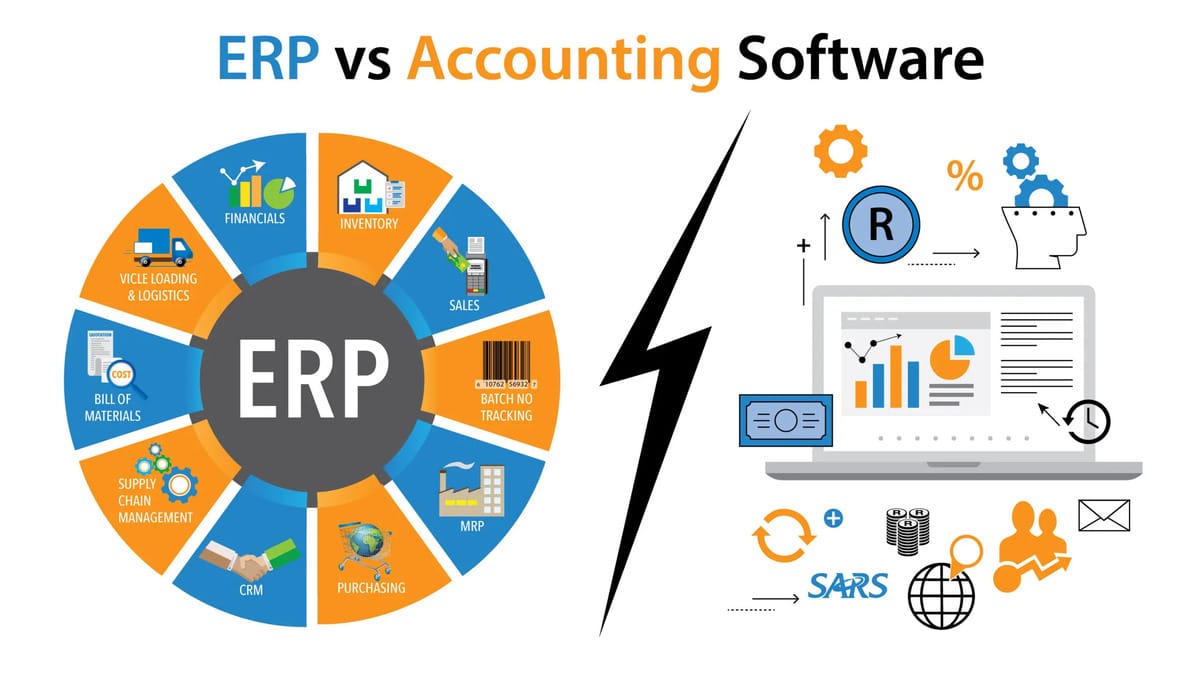
ERP vs Accounting Software: what are the differences between them?

Accounting Software

Both ERP & Accounting Software help manage a company’s finances and accounting and are often confused. That is why they sometimes interchange these terms when they are really different types of software. Knowing their differences is essential, especially if one of them is going to be implanted. Why is it so risky to confuse them? Mainly, because the needs of the companies may not be covered. Each tool has a different scope and functionalities. While an ERP integrates different modules that help control and automate the processes of various areas of the company such as project management, sales or accounting, accounting software is much more limited. Accounting software , also known as entry software, operates independently in that it uses its own database and does not integrate with other programs. On the other hand, an ERP comprises a comprehensive solution, where the data from the different modules are collected in the same tool. In this way, efficiency can be gained in all areas of the company, not only in accounting. What are the main differences between an ERP and an Accounting Software? The main differences between an ERP and an Accounting Software are found in the functionalities: Functionalities of an Accounting software Functionalities of an ERP Why choose an ERP over an Accounting Software ERPs allow you to improve communication between the different departments of the company . In this way, the accounting activity can be enriched with information from other departments and productivity will be increased. An accounting software does not have other modules and this means that it is limited to the accounting area. In this way, if there is data from other areas that can help streamline accounting tasks, it cannot be used centrally. In short, an ERP increases the scope of the business. ERPs like Dynamics Business Central are scalable software that adapts to the growth of companies. They allow streamlining work processes, sales and accounting tasks. Yash Jain

The Future of Banking: Fintech Innovations and Digital Transformation

Fintech Innovations and Digital Transformation

Introduction: The banking industry is undergoing a significant transformation with the emergence of fintech innovations and digital Transformation . These technological advancements are reshaping traditional banking practices, introducing new ways of conducting financial transactions, and improving overall customer experience. In this article, we will explore the future of banking, focusing on key fintech innovations and the digital transformation that is revolutionizing the way we bank. Section 1: Understanding Fintech and Its Impact on Banking Fintech, short for financial technology, refers to the use of technology to deliver financial services and products in a more efficient, convenient, and accessible manner. Here are some key fintech innovations that are driving the future of banking: Image Source: techmagic.co Section 2: Digital Transformation in Banking Digital transformation refers to the integration of digital technologies and solutions across all aspects of banking operations, resulting in improved efficiency, enhanced customer experience, and increased innovation. Here are some key areas where digital transformation is reshaping the banking industry: Image Source: tibco.com Section 3: Benefits and Implications of Fintech and Digital Transformation The integration of fintech innovations and digital transformation in banking brings forth numerous benefits and implications for both customers and financial institutions: Image Source: worldbank.scene7.com and s.yimg.com Conclusion: The future of banking lies in the fusion of fintech innovations and digital transformation. As technology continues to evolve, the banking industry will witness enhanced customer experiences, improved operational efficiency, and greater financial inclusion. Fintech innovations like mobile banking, digital payments, and online lending are reshaping the way we conduct financial transactions, while digital transformation is revolutionizing banking operations and security measures. Embracing these advancements will not only benefit customers with greater convenience and accessibility but also enable financial institutions to stay competitive in an increasingly digital world. The future of banking is undoubtedly characterized by fintech and digital transformation, paving the way for a more connected and technologically advanced banking ecosystem. Also read The Role of Ethics in Finance: Promoting Responsible Investment Practices Pranjal NathPranjal Nath is a versatile content writer with a passion for exploring and writing about various topics. With expertise in finance, education, science, sports, and travel, he creates engaging and informative content for readers. Through his writing, Pranjal aims to educate and inspire his audience to learn and experience new things.

The Role of Ethics in Finance: Promoting Responsible Investment Practices

ethics in finance

Introduction In today’s interconnected and globalized world, finance plays a crucial role in shaping economies and societies. However, with great power comes great responsibility. The ethical dimension of finance cannot be overlooked, as it has the potential to impact individuals, communities, and the environment. This article explores the significance of ethics in finance and how it promotes responsible investment practices. Understanding Ethics in Finance Ethics in finance refers to the principles and values that guide financial professionals and institutions in their decision-making processes. It involves a commitment to transparency, fairness, accountability, and the well-being of stakeholders. When ethics are integrated into financial practices, it fosters trust, ensures sustainable growth, and minimizes risks associated with unethical behavior. Image Source: marketing91.com Promoting Responsible Investment Practices Ethical investment, also known as socially responsible investment (SRI) or sustainable investment, is a practice that aligns financial goals with ethical values. It involves investing in companies and projects that adhere to environmental, social, and governance (ESG) criteria. By integrating ESG factors into investment decisions, ethical investors can support businesses that prioritize sustainability, social justice, and responsible governance. Impact investing goes beyond financial returns; it seeks to generate positive social and environmental impact alongside financial gains. Investors actively allocate capital to projects and enterprises that address societal challenges such as poverty, climate change, and healthcare access. This approach allows individuals and institutions to contribute to the betterment of society while earning financial returns, thus aligning investment goals with ethical considerations. Corporate Social Responsibility refers to the commitment of businesses to operate in a socially and environmentally responsible manner. Ethical finance encourages companies to integrate CSR principles into their core operations, including responsible supply chain management, employee welfare, and environmental stewardship. By adopting CSR practices, organizations contribute positively to the communities in which they operate, thereby promoting responsible investment practices. Transparency is a fundamental aspect of ethical finance. Financial institutions and companies are encouraged to provide clear and comprehensive reporting on their financial performance, risk exposure, and ESG practices. Transparent reporting allows investors to make informed decisions based on accurate information, fostering trust and accountability within the financial sector. Ethics should also be integrated into risk assessment processes in finance. This involves evaluating potential risks associated with investments, such as environmental risks, human rights violations, and governance issues. By considering these ethical factors, investors can make more responsible decisions that mitigate negative impacts and contribute to long-term sustainable development. Benefits of Ethical Finance Integrating ethics into finance builds trust among investors, customers, and the general public. When financial institutions and professionals prioritize ethical behavior, it enhances their reputation and credibility. This trust is crucial for the stability and growth of the financial sector, as well as attracting responsible investors. Ethical finance promotes sustainable growth by encouraging investments in environmentally friendly and socially responsible projects. By allocating capital to initiatives that align with ESG criteria, investors contribute to the development of sustainable industries and practices. This, in turn, fosters long-term economic stability and protects the environment for future generations. Ethical finance provides opportunities to make a positive social impact. By investing in projects that address social challenges, such as renewable energy, affordable housing, and education, investors contribute to the betterment of society. This aligns financial goals with the broader goal of creating a more equitable and sustainable world. Ethical finance practices help mitigate risks associated with unethical behavior. By incorporating ESG factors into investment decisions, investors can identify potential risks and avoid companies involved in activities that may harm the environment, violate human rights, or engage in fraudulent practices. This risk-aware approach protects investments and minimizes reputational damage. Conclusion The role of ethics in finance is vital for promoting responsible investment practices. By embracing ethical considerations, financial institutions, professionals, and investors can contribute to a sustainable and equitable world. Ethical finance encourages transparent reporting, responsible investment strategies, and corporate social responsibility, fostering trust, sustainable growth, and positive social impact. Embracing ethical finance is not only the right thing to do but also makes financial sense in the long run. Muskan BansalMuskan Bansal is a finance enthusiast with a keen interest in financial news and sports. With a passion for staying up-to-date with the latest developments in the world of finance, Muskan combines a strong analytical mindset with a love for sports to gain a well-rounded perspective. Equipped with a deep understanding of both domains, Muskan seeks to bridge the gap between finance and sports, exploring the intersection of these two diverse fields.

Impact Investing: Combining Financial Returns with Social and Environmental Impact

Financial Returns with Social and Environmental

Impact investing is an approach that goes beyond traditional investing by considering financial returns with social and environmental impact of investments. It aims to generate positive change while still achieving financial goals. In this article, we will explore the concept of impact investing, its rise in popularity, its benefits, different types of impact investments, measurement of impact, challenges, and risks associated with impact investing, as well as examples and guidance on getting started in this field. Introduction In a world facing numerous social and environmental challenges, impact investing offers a compelling solution. Impact investing involves deploying capital in a way that not only generates financial returns but also creates a positive impact on society and the environment. It is an investment strategy that seeks to align financial goals with social and environmental objectives. Understanding Impact Investing Impact investing goes beyond traditional investing by incorporating social and environmental considerations into the investment process. Unlike purely profit-driven investments, impact investing takes into account the broader consequences of investments on people and the planet. It aims to address pressing issues such as poverty, inequality, climate change, and access to education and healthcare. The Rise of Impact Investing Over the past decade, impact investing has gained significant traction. More individuals and institutions are recognizing the importance of investing in a way that aligns with their values and contributes to positive change. The global impact investing market has witnessed remarkable growth, indicating a shift towards a more sustainable and responsible investment approach. Benefits of Impact Investing Impact investing offers a range of benefits to investors. It provides an opportunity to achieve financial returns while making a difference in society. By investing in companies and organizations that prioritize social and environmental impact, investors can contribute to the creation of a more equitable and sustainable world. Impact investing also allows for risk mitigation through diversification across various sectors and asset classes. Types of Impact Investments There are several types of impact investments available to individuals and institutions. Socially responsible investing (SRI) focuses on companies that exhibit responsible business practices. Environmental, social, and governance (ESG) investing takes into account environmental and social factors alongside financial considerations. Community development investing targets underserved communities, while sustainable agriculture and clean energy investments address specific environmental challenges. Image Source: static.theceomagazine.net Measuring Impact on Financial Returns with Social and Environmental Measuring the impact of investments is crucial to ensure accountability and transparency. Various metrics and tools are used to evaluate the social and environmental performance of impact investments. Social and environmental performance indicators help investors assess the effectiveness of their investments in achieving desired outcomes. Third-party certifications and standards provide additional validation and assurance. Challenges and Risks (Financial Returns with Social and Environmental) While impact investing presents numerous opportunities, it also comes with challenges and risks. The lack of standardized metrics and reporting frameworks makes it difficult to compare and assess the impact of different investments. Balancing financial returns with impact objectives can be a complex task. Additionally, managing risk in impact investing requires careful evaluation and due diligence. Examples of Impact Investing There are numerous examples of successful impact investments across various sectors. These range from healthcare and education initiatives to renewable energy projects and sustainable agriculture. Case studies highlight the positive impact that well-executed investments can have on communities, the environment, and the financial bottom line. Getting Started with Impact Investing To get started with impact investing, it is important to identify personal values and goals. Researching impact investment opportunities and understanding the various sectors and asset classes available is crucial. Working with financial advisors and experts can provide valuable guidance in selecting suitable investments that align with individual objectives. Impact Investing and Corporate Social Responsibility Businesses also play a crucial role in impact investing. Integrating impact investing into corporate strategies allows companies to create shared value and contribute to sustainable development. By incorporating social and environmental considerations into their operations, businesses can drive positive change while achieving financial success. The Future of Impact Investing (Financial Returns with Social and Environmental) The future of impact investing looks promising. Predictions and trends indicate continued growth and maturation of the impact investing industry. Government support and policy changes are expected to further accelerate the adoption of impact investing. Global collaboration and partnerships will be crucial in addressing global challenges and achieving sustainable development goals. Conclusion Impact investing offers a unique opportunity to combine financial returns with social and environmental impact. It is a powerful tool for individuals and institutions to create positive change while achieving their investment objectives. By considering the broader implications of investments, impact investing has the potential to drive sustainable development and address pressing global challenges. Aditya JaiswalAditya Jaiswal is a versatile writer with a keen interest in finance, games, and sports. With a passion for exploring the world of numbers and a flair for storytelling, he brings a unique perspective to his writing. Aditya’s work is informed by his analytical mind and his ability to break down complex ideas into simple concepts that anyone can understand.

The Impact of Inflation on Personal Finances and Investment Strategies

Personal Finances and Investment Strategies

Personal Finances and Investment Strategies Introduction: Inflation is an important economic concept that can have a significant impact on your personal finances and investment strategies. This article aims to explain the effects of inflation in simple terms, helping you understand how it can affect your money and guide you in making informed financial decisions. What is inflation? Inflation refers to the general increase in prices over time, leading to a decrease in the purchasing power of money. When inflation occurs, the same amount of money can buy fewer goods and services than before. For example, if the price of a loaf of bread rises from $2 to $2.50, you would need to spend more money to buy the same item. How does inflation affect Personal Finances and Investment Strategies? How does inflation impact investment strategies(Personal Finances and Investment Strategies)? Image Source: sp.hsbc.com.my Conclusion: Inflation can have a substantial impact on personal finances and investment strategies. By understanding how inflation affects your money and making informed financial decisions, you can mitigate its negative effects and safeguard your financial well-being. Consider diversifying your investments, exploring inflation-protected options, and regularly reviewing your portfolio to navigate the changing economic landscape effectively. You can also read about Income Tax Authorities Powers and Functions Pranjal NathPranjal Nath is a versatile content writer with a passion for exploring and writing about various topics. With expertise in finance, education, science, sports, and travel, he creates engaging and informative content for readers. Through his writing, Pranjal aims to educate and inspire his audience to learn and experience new things.

Demystifying Income Tax Authorities: Understanding Their Powers and Functions for Efficient Tax Compliance

Income Tax Authorities power and functions

Income Tax Authorities Powers and Functions Income tax is a critical source of revenue for governments worldwide. To ensure effective tax administration, income tax authorities are empowered with various powers and functions. In this article, we will explore the powers and functions of income tax authorities, their role in tax collection, their handling of tax evasion cases, and the rights and responsibilities of taxpayers. Understanding Income Tax Authorities Income tax authorities are government bodies responsible for the administration and enforcement of income tax laws. Their primary role is to ensure that taxpayers comply with tax regulations, accurately report their income, and pay the appropriate amount of tax. These authorities possess wide-ranging powers to carry out their functions effectively. Powers and Functions of Income Tax Authorities 3.1. Administrative Functions The administrative functions of income tax authorities involve taxpayer registration, processing of tax returns, issuance of tax notices, and maintaining taxpayer records. They are responsible for managing the overall tax administration system, ensuring its efficiency and transparency. 3.2. Investigative Functions Income tax authorities have the power to conduct investigations and gather evidence related to tax matters. They can summon individuals for inquiries, examine books of accounts and documents, and even conduct raids in cases of suspected tax evasion. These investigative functions help identify non-compliance and ensure tax justice. 3.3. Enforcement Functions Enforcement functions include the collection of taxes, initiation of legal proceedings against tax defaulters, and recovery of tax dues. Income tax authorities can impose penalties, seize assets, and take legal action to enforce tax compliance. By exercising these powers, they maintain the integrity of the tax system and discourage tax evasion. Key Income Tax Authorities Several authorities play crucial roles in the administration of income tax. Let’s look at some of the key authorities: 4.2. Income Tax Department (ITD) The Income Tax Department is the main operational body responsible for the day-to-day administration of income tax laws. It carries out functions such as tax assessment, collection, and scrutiny of tax returns. The ITD also plays a vital role in educating taxpayers about their obligations and facilitating voluntary compliance. 4.3. Assessing Officers (AO) Assessing Officers are designated officials within the Income Tax Department who are responsible for assessing the tax liability of individual taxpayers and entities. They have the authority to scrutinize tax returns, conduct inquiries, and issue assessment orders. Assessing Officers play a crucial role in determining the accuracy and completeness of tax reporting. 4.4. Tax Recovery Officers (TRO) Tax Recovery Officers are responsible for recovering tax dues from defaulting taxpayers. In cases where taxpayers fail to pay their tax liabilities, the Tax Recovery Officers initiate legal proceedings, attach assets, and execute recovery actions. Their primary aim is to ensure that tax arrears are collected in a timely manner. The Role of Income Tax Authorities in Tax Collection Income tax authorities play a vital role in the collection of taxes, which form a significant part of government revenue. Through efficient tax administration, they ensure that individuals and businesses fulfill their tax obligations. By implementing systems for tax registration, return filing, and payment processing, income tax authorities streamline the tax collection process and contribute to the overall economic development of the country. How Income Tax Authorities Handle Tax Evasion Cases Tax evasion is a serious offense that undermines the integrity of the tax system. Income tax authorities are at the forefront of combating tax evasion and ensuring compliance. When cases of suspected tax evasion arise, they initiate investigations, gather evidence, and take appropriate legal action. Through audits, surveys, and other investigative techniques, income tax authorities uncover hidden income, undisclosed assets, and fraudulent practices. Rights and Responsibilities of Taxpayers While income tax authorities have powers and functions to enforce tax compliance, taxpayers also have rights and responsibilities. Taxpayers have the right to be treated fairly, to confidentiality of their tax information, and to appeal against any adverse decisions. It is the responsibility of taxpayers to maintain accurate records, file tax returns on time, and pay the correct amount of tax. By fulfilling their responsibilities, taxpayers contribute to a transparent and equitable tax system. Collaborative Efforts between Income Tax Authorities and Taxpayers Effective tax administration requires collaboration between income tax authorities and taxpayers. Authorities strive to provide clear guidance, simplified procedures, and educational resources to help taxpayers meet their obligations. They encourage voluntary compliance and offer support to taxpayers through helplines, online portals, and tax awareness programs. By fostering a collaborative environment, income tax authorities aim to enhance tax compliance and reduce the tax gap. Recent Developments in Income Tax Regulations Income tax regulations are dynamic and subject to change based on economic, social, and legislative factors. Recent developments include the introduction of digital initiatives for seamless tax filing, increased focus on tax transparency and anti-abuse measures, and measures to curb tax evasion and promote tax compliance. Income tax authorities continuously adapt to these changes, leveraging technology and innovative strategies to ensure effective tax administration. The Impact of Income Tax Authorities on Tax Compliance Income tax authorities play a crucial role in shaping tax compliance behavior. By exercising their powers and functions, they create a deterrence effect, discouraging taxpayers from evading taxes. The fair and efficient administration of income tax laws builds trust and confidence among taxpayers, promoting voluntary compliance. A robust tax compliance culture not only ensures the collection of adequate tax revenues but also fosters economic stability and social development. Through targeted enforcement actions, public awareness campaigns, and educational initiatives, income tax authorities raise awareness about the importance of tax compliance and the consequences of non-compliance. By maintaining a strong presence and conducting regular audits, they demonstrate their commitment to upholding tax laws and ensuring a level playing field for all taxpayers. Challenges Faced by Income Tax Authorities While income tax authorities play a vital role in tax administration, they also face numerous challenges. Some of these challenges include: Despite these challenges, income tax authorities strive to overcome them by adopting innovative approaches, leveraging data analytics, and enhancing collaboration with other … Read more

Adani Enterprises and Ports Experience Decline: Nifty Soars Above 18380, Sensex Climbs 150 Points; Bank Nifty Crosses 44000

Adani Enterprises and Ports

Welcome to our latest market update! We have some fantastic news to share about the current state of the stock market. we’ll explore the performance of Bank Nifty and highlight some notable changes in stocks like Adani Enterprises and Ports. In recent news, Adani Enterprises and Ports have experienced a decline in their value, while the Nifty index has shown a remarkable surge above 18380 points. Simultaneously, the Sensex has climbed 150 points, and the Bank Nifty has crossed the significant milestone of 44000 points. These fluctuations have captured the attention of investors and market enthusiasts alike, prompting a closer look at the reasons behind these movements and their potential implications for the financial landscape. we’ll dive into the details of how Nifty has surpassed 18,380 and Sensex has gained 150 points. So, let’s get started and uncover the exciting developments in the market! Nifty Surges Above 18,380: To start things off, Nifty, one of the most important stock market indices in India, has experienced a significant jump. It has soared above the impressive milestone of 18,380. This surge indicates a strong upward trend in the overall market sentiment. Investors and traders are likely to be excited about this positive movement, which may pave the way for potential profit opportunities. Sensex Rises 150 Points: In addition to Nifty’s impressive performance, Sensex, another crucial market index, has also seen a noteworthy increase. It has climbed up by 150 points, signaling a positive market sentiment. Such upward movements in Sensex often indicate a collective rise in the values of the top stocks listed on the Bombay Stock Exchange (BSE). Bank Nifty Surpasses 44,000: The banking sector has shown promising growth as well, with Bank Nifty surpassing the 44,000 mark. This achievement suggests that banking stocks are experiencing an upward trajectory. Investors with holdings in the banking industry may witness potential gains as the sector continues to exhibit positive momentum. Notable Stock Movements: While the market is generally seeing an upswing, it’s essential to keep an eye on specific stocks that may have experienced contrasting movements. Adani Enterprises and Ports, for instance, have encountered some declines. It’s crucial for investors and traders to monitor these stocks closely, as they may present unique opportunities for those looking to make informed investment decisions. Frequently Asked Questions (FAQs): Conclusion: In conclusion, the stock market is currently buzzing with excitement as Nifty surpasses 18,380 and Sensex rises by 150 points. Bank Nifty has also showcased strong performance, crossing the 44,000 mark. While some stocks like Adani Enterprises and Ports have witnessed declines, it’s vital to approach the market with vigilance and carefully assess investment opportunities. Stay tuned for further updates, and remember to make informed decisions when navigating the dynamic world of stock trading!  Muskan BansalMuskan Bansal is a finance enthusiast with a keen interest in financial news and sports. With a passion for staying up-to-date with the latest developments in the world of finance, Muskan combines a strong analytical mindset with a love for sports to gain a well-rounded perspective. Equipped with a deep understanding of both domains, Muskan seeks to bridge the gap between finance and sports, exploring the intersection of these two diverse fields.