Titan Company Ltd

Company Current Stock Price Market Capitalization P/E Ratio Debt-to-Equity Ratio Recent Earnings Growth Titan Company Ltd 3,651.00 3.24 trillion 92.63 0.632 14,300 crore Titan Company Ltd: A Glittering Gem in the Indian Lifestyle Market Titan Company Ltd. (Titan), founded in 1984, stands as a beacon of sophistication and ingenuity in India’s vibrant lifestyle landscape. Renowned for its elegance and innovation, Titan has etched its name as a premier player across various segments, weaving seamlessly into the fabric of Indian households. A Multifaceted Portfolio: Titan’s influence spans a diverse array of categories, each reflecting its commitment to excellence: Watches: Titan’s imprint on the Indian watch industry is profound, introducing iconic timepieces renowned for their reliability and style. With a diverse portfolio of brands tailored to different segments, including: Jewellery: Through Tanishq, Titan reigns supreme in the Indian jewellery sphere, offering a myriad of designs crafted in gold, diamonds, and precious stones, catering to diverse tastes and occasions. Eyewear: Titan Eyeplus stands as a bastion of chic eyewear solutions, encompassing both functional corrective lenses and fashionable sunglasses. Other Accessories: Titan’s ventures into fragrances, fashion accessories, and traditional Indian attire underscore its commitment to evolving alongside consumer preferences. Brand Strength and Innovation: Titan’s ascent to eminence is underpinned by its unwavering dedication to brand building, design innovation, and a customer-centric ethos. Robust brand recognition: Titan’s brands have transcended mere products, embodying trust, quality, and style in the eyes of consumers. Design excellence: Titan continually pushes the boundaries of design, offering a plethora of choices that resonate with varied tastes. Technological prowess: From solar-powered watches to lightweight materials, Titan seamlessly integrates cutting-edge technology into its offerings. Expansive retail footprint: With a widespread network of stores across India, Titan ensures accessibility and delivers unparalleled customer service. Looking Forward: As India’s lifestyle landscape evolves, Titan stands poised to chart new horizons of growth. Anchored by its commitment to innovation and diversification, the company is primed to capitalize on the burgeoning demand for premium lifestyle products. With an unwavering focus on meeting the evolving needs of Indian consumers, Titan is set to continue its illustrious journey as a beacon of elegance and innovation in the Indian lifestyle market.

Varun Beverages Ltd

Company Current Stock Price Market Capitalization P/E Ratio Debt-to-Equity Ratio Recent Earnings Growth Varun Beverages Ltd 1,409.00 1.82 trillion 96.9 73.3 2,677.01 crore Varun Beverages Ltd: Quenching Thirst and Refreshing Portfolios Varun Beverages Ltd. (VBL), since its inception in 1995, has emerged as a formidable player in the Indian beverage landscape. As the world’s second-largest franchisee of PepsiCo (outside the US), VBL boasts a rich legacy of success, anchored by its enduring partnership with PepsiCo. A Portfolio of Refreshing Choices: VBL’s offerings extend far beyond just colas, presenting a diverse array of beverages tailored to suit varied consumer preferences: Carbonated Soft Drinks (CSDs): As leading bottlers of renowned PepsiCo brands like Pepsi, 7 Up, Mountain Dew, and Mirinda, VBL has become synonymous with refreshment. Non-Carbonated Beverages (NCBs): Recognizing the growing demand for healthier alternatives, VBL provides an extensive range of options, including: Extensive Reach and Distribution Network: VBL’s influence extends far and wide, facilitated by a robust distribution network that ensures their beverages quench thirsts in every nook and cranny of India. Operating across 27 states and 7 union territories, VBL’s footprint also spans international borders, reaching markets in Nepal, Sri Lanka, Morocco, and various African nations. Such expansive reach underscores VBL’s dominance in the beverage market. Looking Forward: With a steadfast partnership with PepsiCo, a diverse product portfolio, and a strategic focus on market expansion, VBL is poised for sustained growth. The company is primed to capitalize on the burgeoning demand for convenient and refreshing beverages, both within India and in its international markets. As VBL continues to innovate and adapt to evolving consumer preferences, its trajectory towards continued success remains promising.

BSE vs NSE: Which Is Better for Stock Market Beginners in 2024?

BSE vs NSE for beginners in 2024

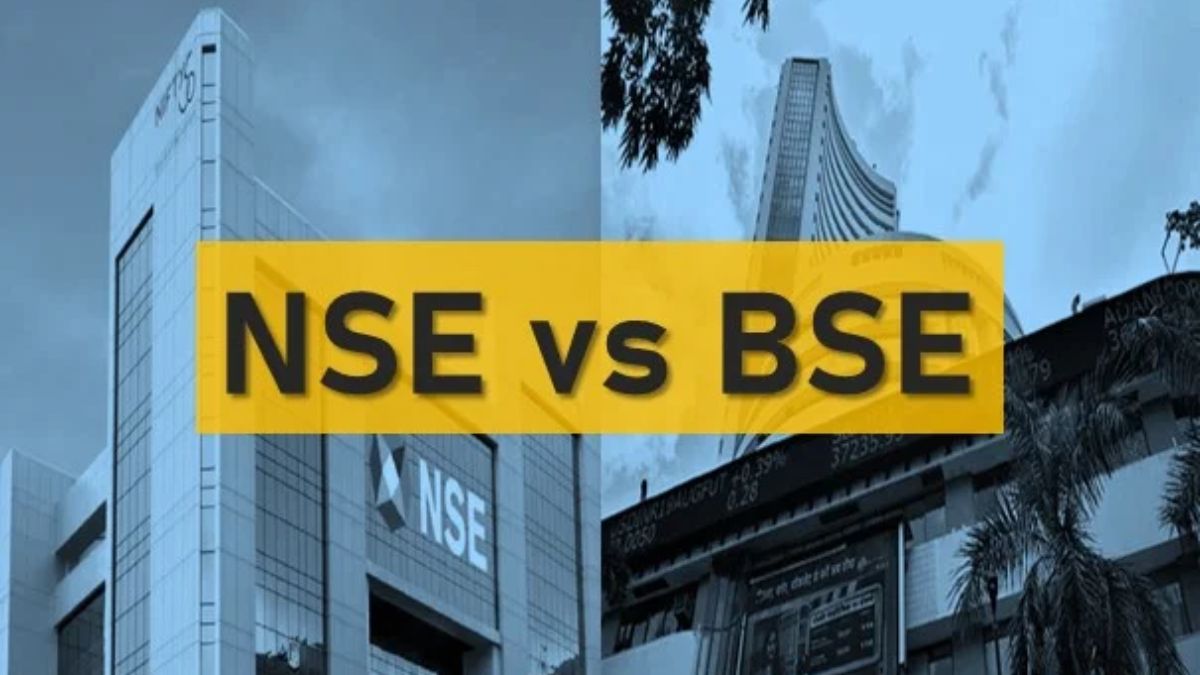
Introduction BSE vs NSE In the bustling world of stock trading, where every decision counts, choosing the right platform is crucial, especially for beginners stepping into the dynamic realm of the stock market. The BSE vs NSE stand as two pillars of India’s financial landscape, each with its own merits and demerits. Choosing between the Bombay Stock Exchange (BSE) and the National Stock Exchange (NSE) for beginners in 2024 depends on several factors, including ease of use, accessibility, trading fees, liquidity, and the availability of educational resources. But which one is better suited for beginners in the year 2024? Let’s explore both the option to uncover the answer. Here’s a comparison to help you decide: Understanding BSE vs NSE Bombay Stock Exchange (BSE): Established in 1875, BSE is Asia’s oldest stock exchange and ranks among the world’s top exchanges in terms of market capitalization. BSE facilitates trading in equities, derivatives, mutual funds, and debt instruments. It is renowned for its benchmark index, the Sensex, which comprises 30 of the largest and most actively traded stocks on the exchange. Image Source: bl-i.thgim.com National Stock Exchange (NSE): Founded in 1992, NSE is a relatively newer entrant but has quickly risen to prominence, becoming the largest stock exchange in India by both trading volume and market capitalization. NSE offers a wide range of financial products, including equities, derivatives, exchange-traded funds (ETFs), and debt securities. Its flagship index, the Nifty 50, tracks the performance of 50 large-cap stocks listed on the exchange. Image Source: livemint.com Accessibility and Liquidity: Both BSE vs NSE are major stock exchanges in India, offering a wide range of listed companies and financial instruments. However, NSE is typically considered more liquid and has higher trading volumes compared to BSE. Higher liquidity can result in narrower bid-ask spreads and better price discovery, making it potentially more suitable for beginners. Trading Fees: The trading fees charged by brokers may vary between BSE vs NSE. Beginners should compare brokerage charges, transaction fees, and other costs associated with trading on each exchange to determine which one offers the most cost-effective solution. Ease of Use and Technology: NSE is known for its advanced trading technology and user-friendly trading platforms, which can be beneficial for beginners who are just starting to navigate the stock market. BSE also offers online trading platforms and mobile apps, but it’s essential to assess the usability and features offered by each exchange’s trading platforms. Educational Resources: Both BSE vs NSE provide educational resources and investor awareness programs to help beginners understand the basics of investing and trading in the stock market. Beginners may want to explore the educational materials, seminars, webinars, and online courses offered by each exchange to enhance their knowledge and skills. Regulatory Oversight: Both BSE vs NSE are regulated by the Securities and Exchange Board of India (SEBI), which ensures fair and transparent trading practices in the Indian capital markets. Beginners can have confidence in the regulatory oversight provided by SEBI, regardless of the exchange they choose to trade on. Conclusion Ultimately, the choice between BSE vs NSE for beginners in 2024 depends on individual preferences, trading objectives, and comfort levels. It’s advisable for beginners to research and compare the features, services, and costs offered by both exchanges before making a decision. Additionally, seeking guidance from experienced investors or financial advisors can help beginners navigate the complexities of the stock market more effectively. In conclusion, BSE vs NSE offer viable options for beginners venturing into the stock market in 2024. While NSE may appeal to those seeking advanced trading features and higher liquidity, BSE’s legacy and stability can instill confidence in risk-averse investors. Beginners are encouraged to conduct thorough research, seek guidance from financial experts, and start with small investments to gain hands-on experience and navigate the complexities of the stock market effectively. With diligence and perseverance, beginners can embark on a rewarding journey towards financial success, regardless of whether they choose BSE, NSE, or both. Also read our previous news: शेयर बाजार शनिवार, 2 मार्च को भी खुलेगा। सर्किट लिमिट और इंट्राडे-डे में ये बदलाव समस्या पैदा कर सकते हैं।

शेयर बाजार शनिवार, 2 मार्च को भी खुलेगा। सर्किट लिमिट और इंट्राडे-डे में ये बदलाव समस्या पैदा कर सकते हैं।

शेयर बाजार

शेयर बाज़ार शनिवार, 2 मार्च को भी खुलेगा, जो एक अत्यंत महत्वपूर्ण और व्यापक रूप से चर्चित घटना है। इस नए सत्र से शेयर बाजार में कुछ अहम बदलाव होंगे जो निवेशकों के लिए काफी अहम हो सकते हैं। आइए देखें कि ये परिवर्तन स्वयं कैसे प्रकट होंगे: शनिवार को शेयर बाजार फिर से खुलने पर इन बदलावों के लिए निवेशकों को सावधानी और तैयारी की आवश्यकता होती है। ये बदलाव बाज़ार के लिए चुनौतियाँ पैदा कर सकते हैं, लेकिन समय-समय पर सही जानकारी और निवेश सुरक्षा के ज़रिए निवेशक इन चुनौतियों से पार पा सकते हैं। दोनों सत्रों की समय सीमा क्या है? पहला सत्र मुख्य स्थान पर आयोजित किया जाएगा और सुबह 9:15 बजे से खुला रहेगा। प्रातः 10:00 बजे तकदूसरा सत्र सुबह 11:30 बजे शुरू होगा। और दोपहर 12:30 बजे समाप्त होता है। Image Source: jagranimages.com प्री-लॉन्च बैठकों की तारीखें इस प्रकार हैं: पहला सत्र सुबह 9:00 बजे से प्रातः 9:08 बजे तकदूसरा सत्र सुबह 11:15 बजे से। प्रातः 11:23 बजे तकसत्र का समापन 12:40 से 12:50 तक कृपया ध्यान दें कि छुट्टी के कारण, कुछ दलाल इस विशेष पेशकश से लाभ प्रदर्शित करने में असमर्थ हैं। इसके बावजूद, कुछ प्रतिभूति कंपनियाँ इंट्रा-डे ट्रेडिंग को निलंबित कर सकती हैं। इसके अलावा, सभी शेयरों के लिए सर्किट लिमिट 5% है। जनवरी में होना था यह स्पेशल सत्र: 2 मार्च को जो स्पेशल ट्रेडिंग होनी है, वह जनवरी में ही होनी थी। इसके लिए 20 जनवरी का दिन फिक्स किया गया था। हालांकि इस दिन नॉर्मल ट्रेडिंग हुई, जैसे कि सोमवार से शुक्रवार के आम दिनों में होता है। 22 जनवरी को, सोमवार, अयोध्या के राम मंदिर के प्राण प्रतिष्ठा समारोह के मौके पर स्टॉक्स एक्सचेंज बंद थे। स्पेशल ट्रेडिंग सत्र इसलिए हो रहा है, ताकि साइबर हमले या सर्वर क्रैश की विषम परिस्थितियों में भी ट्रेडिंग जारी रह सके। इससे न केवल ट्रेडिंग जारी रहेगी, बल्कि डेटा भी सुरक्षित रहेगा। इस विशेष सत्र के दौरान ट्रेडिंग करते समय यह ध्यान रखें कि उच्च और निम्न सर्किट लिमिट 5 फीसदी होगी और कुछ ब्रोकरेज फर्म में इंट्रा-डे ट्रेडिंग बंद रह सकती है। ट्रेडिंग से पहले सम्पूर्ण जानकारी हासिल करें और निवेश की समय-समय पर जांच करें। निष्कर्ष (शेयर बाजार) शेयर बाजार का शनिवार को खुलना निश्चित रूप से कुछ चुनौतियों का सामना ला सकता है। Image Source: zeebiz.com सर्किट लिमिट में बदलाव: सर्किट लिमिट में बदलाव से बाजार में अस्थिरता बढ़ सकती है। निवेशकों को अचानक उतार-चढ़ाव के लिए तैयार रहना होगा। जोखिम प्रबंधन और सावधानीपूर्ण निवेश रणनीति महत्वपूर्ण होगी। इंट्राडे-डे में बदलाव: इंट्राडे-डे में बदलाव से ट्रेडिंग रणनीति में बदलाव की आवश्यकता हो सकती है। ट्रेडरों को नए नियमों के अनुकूल होने और अपनी रणनीतियों को समायोजित करने की आवश्यकता होगी। तकनीकी विश्लेषण और बाजार की गतिविधियों पर ध्यान देना महत्वपूर्ण होगा। सामान्य रूप से, शेयर बाजार का शनिवार को खुलना निश्चित रूप से कुछ चुनौतियों का सामना ला सकता है। निवेशकों और ट्रेडरों को इन चुनौतियों के लिए तैयार रहना होगा और अपनी रणनीतियों को तदनुसार समायोजित करना होगा। इसके अलावा, यह ध्यान रखना महत्वपूर्ण है कि शेयर बाजार में हमेशा जोखिम शामिल होता है। निवेशकों को केवल उतना ही पैसा निवेश करना चाहिए जितना वे खोने का जोखिम उठा सकते हैं। यहां कुछ महत्वपूर्ण बातें हैं जिन पर आपको ध्यान देना चाहिए: इन बातों पर ध्यान देने से आपको शेयर बाजार में सफलता प्राप्त करने में मदद मिलेगी। Also, Read: 12 फीसदी तक शेयर में गिरावट, 45 हजार करोड़ रुपये इकट्ठा करने की योजना भी काफी नहीं: Vodafone Idea

12 फीसदी तक शेयर में गिरावट, 45 हजार करोड़ रुपये इकट्ठा करने की योजना भी काफी नहीं: Vodafone Idea

शेयर

कंपनी ने घोषणा की है कि वह इक्विटी या इक्विटी-संबंधित उपकरणों के माध्यम से 20,000 करोड़ रुपये जुटाएगी और शेष धनराशि ऋण और निवेशकों के माध्यम से निवेश करने का प्रस्ताव रखती है। एक दूरसंचार कंपनी जो व्यक्तियों को फ़ोन कॉल करने में मदद करती है, वित्तीय कठिनाइयों का सामना कर रही है और उसे अतिरिक्त धन की आवश्यकता है। कंपनी के अधिकारियों ने 45,000 करोड़ रुपये की मदद लेने का फैसला किया है. लेकिन इतनी बड़ी रकम के बावजूद कंपनी के शेयर एक दिन में 12 फीसदी तक गिर गए. सुबह की शुरुआत में शेयर की कीमत 14 रुपये थी. कंपनी की योजना कंपनी का कुछ हिस्सा निवेशकों को बेचकर और बाकी रकम उधार लेकर 20,000 करोड़ रुपये जुटाने की है। कंपनी के मालिक भी कुछ पूंजी का योगदान देंगे। 2 अप्रैल को एक बैठक निर्धारित है जिसमें शेयरधारक इस बात पर मतदान करेंगे कि वित्तपोषण योजना को लागू किया जाए या नहीं। आने वाले महीनों में फंड आने की उम्मीद है। Image Source: deccanherald.com शेयर की गिरती कीमतें वोडाफोन आइडिया के शेयर 28 फरवरी को एनएसई पर 4.45 फीसदी की गिरावट के साथ 16.1 रुपये पर बंद हुए। हालांकि, 22 फरवरी को बोर्ड द्वारा वित्तपोषण योजना की घोषणा के बाद से कंपनी के शेयरों में 5.2% की बढ़ोतरी हुई है। स्टॉक एक्सचेंज को दिए गए कंपनी के बयान के अनुसार, प्रस्तावित वित्तपोषण का उद्देश्य इसके ऑपरेटिंग मेट्रिक्स में उल्लेखनीय सुधार करना है। पिछली 10 तिमाहियों में, कंपनी ने अपने 4जी ग्राहक आधार और प्रति उपयोगकर्ता औसत राजस्व (एआरपीयू) में लगातार वृद्धि दर्ज की है। कंपनी का वित्तीय स्वास्थ्य वित्तीय वर्ष 2023-24 की तीसरी तिमाही में, दूरसंचार ऑपरेटर ने 6,985.9 करोड़ रुपये का शुद्ध घाटा दर्ज किया, जो पिछले वर्ष की समान अवधि के 7,990 करोड़ रुपये की तुलना में 12.56 प्रतिशत कम है। हालांकि, राजस्व सालाना आधार पर 0.49 प्रतिशत बढ़कर 10,673.1 करोड़ रुपये हो गया। वोडाफोन आइडिया, आदित्य बिरला समूह और वोडाफोन समूह का एक संयुक्त उद्यम, 2जी, 3जी और 4जी प्लेटफॉर्म पर राष्ट्रव्यापी वॉयस और डेटा सेवाएं प्रदान करता है।इस वृद्धि और कंपनी की वित्तीय स्थिति के बावजूद, शेयर बाजार में गिरावट आई, जिससे अधिकांश प्रशंसकों में चिंता पैदा हो गई। हालाँकि, बोर्ड द्वारा पहल करने और तत्काल कार्रवाई की योजना बनाने से, कंपनी आगे बढ़ने के लिए अच्छी स्थिति में है। Image Source: indiatv.in वोडाफोन आइडिया के शेयर मूल्य में गिरावट का मुख्य कारण वित्तीय दुविधा और बाजार की समग्र प्रतिक्रिया है। हालाँकि, यदि कंपनी की प्रस्तावित योजना का समर्थन किया जाता है, तो स्टॉक में उतार-चढ़ाव हो सकता है। इस दौरान वित्तीय निवेशकों को स्थिरता प्रदान करने की आवश्यकता है ताकि वे अपने निवेश निर्णयों को समझ सकें और सूचित रह सकें।वोडाफोन आइडिया के शेयर मूल्य में गिरावट के बावजूद, वित्तीय निर्णय निर्माता भविष्य को लेकर आशावादी हैं और योजना बना रहे हैं। भविष्य में कंपनी की वित्तीय स्थिति और शेयर बाजार की स्थिति पर नजर रखना जारी रखें। निष्कर्ष: वोडाफोन आइडिया की ₹45,000 करोड़ जुटाने की योजना भी नाकाफी नजर आ रही है। कंपनी के शेयरों में 12% की गिरावट आई है, जिससे पता चलता है कि निवेशक कंपनी के भविष्य को लेकर चिंतित हैं। कंपनी को अपनी वित्तीय स्थिति में सुधार के लिए गंभीर कदम उठाने की जरूरत है, जैसे कि ऋण चुकाना, लागत कम करना और राजस्व बढ़ाना। यह देखना बाकी है कि क्या कंपनी इन चुनौतियों से पार पाकर सफल वापसी कर पाती है या नहीं। Also, Read: Market Dynamics: Exploring SBI Securities’ Optimistic Projections for the Indian Stock Market

Market Dynamics: Exploring SBI Securities’ Optimistic Projections for the Indian Stock Market

SBI Securities

Introduction: Embark on a journey through the intricacies of the Indian stock market with insights from SBI Securities. In this detailed exploration, we’ll unravel their latest analysis, offering valuable perspectives on market trends and sectoral opportunities. Let’s delve deeper into their findings to uncover potential pathways for investors. Set out on an excursion into the perplexing universe of market elements as we investigate SBI Securities’ projections for the Indian financial exchange.SBI Securities, an obvious player in the money-related business, offers critical encounters and gauges that shape monetary supporter decisions and market strategies. In this examination, we’ll jump into the guesses, assessments, and perspectives given by SBI Securities, uncovering knowledge of the components driving the Indian monetary trade’s fluctuations and examples. Oblige us as we loosen up the complexities of market components and gain a more significant cognizance of SBI Securities’ outlook for what the future holds. Nifty 50: Mapping the Path to Growth Despite recent volatility, the Nifty 50 index remains resilient, hinting at underlying optimism. SBI Securities identifies an Ascending Triangle pattern, suggesting a bullish outlook. Should the index breach key resistance levels around 22,150 – 22,200, a significant uptrend towards 22,500 and 22,700 could ensue. Investors can take comfort in the 20-day Exponential Moving Average (EMA) acting as a support level at 21,784. With market sentiment cautiously optimistic, monitoring price action and key technical indicators will be crucial in navigating potential fluctuations and seizing opportunities for growth in the Nifty 50. Staying up to date with SBI Securities’ experiences and examination can give important direction to financial backers trying to profit from the file’s vertical energy. Image Source: hindi.news24online.com Bank Nifty: Charting a Course for Renewed Momentum The Bank Nifty, undergoing a phase of stabilization, presents intriguing possibilities for investors. Supported by the 200-day EMA, the index exhibits signs of a Symmetrical Triangle pattern, poised for a breakthrough. A sustained rise above the 50-day Moving Average (DMA) levels of 46,750 – 46,800 could propel the index towards the milestone of 48,000. In times of market turbulence, the 10-20 EMA zone serves as a buffer, offering support in the range of 46,000 – 45,800. Amid these specialized pointers, financial backer opinion remains hopeful but still sober-minded, with consideration going to key monetary information deliveries and national bank strategy choices for additional market heading. As dealers explore the advancing scene, constant observing of these help and opposition levels can assist with illuminating key exchanging choices and exploit likely open doors for benefit. Sectoral Insights: Identifying Growth Opportunities SBI Securities advocates for a selective approach, emphasizing promising sectors such as Auto, Pharma, Banking, IT, and Oil & Gas. Technical analysis suggests a potential upside in the Auto sector, with targets set at 20,800 and 21,250. Similarly, the Pharma sector displays upward momentum, eyeing the 19,600 level. Investors can monitor support levels, including the 20-day EMA and strategic zones, to navigate sectoral dynamics effectively. Besides, SBI Securities features the versatility of the Financial area amid administrative changes, with vital participants ready for development regardless of difficulties. In the IT area, advanced change drives keep on driving interest, offering worthwhile open doors for adroit financial backers. Image Source: finec.in Also, the Oil and Gas area shows a guarantee with recuperation in oil costs and key interests in sustainable power sources, introducing expected roads for long-haul development. With SBI Securities’ bits of knowledge directing their choices, financial backers can gain sectoral valuable learning experiences and enhance their speculation techniques for the most extreme returns. Conclusion: Guiding Investors through Market Volatility ( SBI Securities) As investors navigate the complexities of the stock market, SBI Securities’ insights serve as a compass, offering clarity amidst uncertainty. By leveraging technical patterns, sectoral analysis, and key support levels, investors can make informed decisions, poised for success in the ever-changing market landscape. Furthermore, SBI Securities’ examination and estimates give important direction to both prepared merchants and beginner financial backers, enabling them to explore market unpredictability with certainty. With SBI Securities close by, financial backers can weather conditions and market variances and exploit potential open doors for development and success. Also, Read our previous news: Stock market today: Nifty 50, Sensex rise over 1% this week as focus shifts to fundamentals; Wipro, M&M, SBI shine

Stock market today: Nifty 50, Sensex rise over 1% this week as focus shifts to fundamentals; Wipro, M&M, SBI shine

Nifty 50

Introduction (Sensex): In the dynamic world of finance, the stock market serves as a barometer of economic sentiment, reflecting the collective optimism or pessimism of investors. In the current landscape, the Nifty 50 and Sensex have experienced a notable rise of over 1% this week, signaling a shift in focus towards underlying fundamentals. Against this background, prominent organizations like Wipro, M&M, and SBI have arisen as sparkling stars, driving forward movement on the lookout. We ought to dive further into the factors adding to this upward design and research the consequences for monetary patrons and the greater economy. Securities exchange today: The homegrown market finished with gains for the week finished Friday, February 16, as financial backers shifted their concentration to basics and macroeconomic pointers while trusts persevere that the US Took care of will begin cutting rates from June this year. The expectation of rate cuts has been a critical driver for the market throughout the previous few months. While US expansion stays over the Federal Reserve’s 2% objective, the economy is giving indications of some cooling, as per the most recent information. As the Cash Street Journal uncovered, US retail bargains fell 0.8 percent in January from December — significantly more horrible than presumptions for a 0.3 percent decline. Similarly, National bank data showed January’s current creation edging down 0.1 percent differentiated and suspicions for a 0.2 percent increase. New US full-scale data has fuelled the belief that the Fed could go for rate cuts soon. “Bets for a rate cut of something like 25 reason centers in May edged up to 40 percent, while the possibilities for progress for June had at around 79%, according to the CME Get-together’s FedWatch Gadget,” nitty 50 -gritty Reuters. On Friday, esteem benchmarks the Sensex and the Smart shut with fair acquires amidst positive overall signs. Image Source: business-standard.com Smart 50 shut down at 22,040.70, up 130 spots, or 0.59 percent while the Sensex shut with an increment of 376 spots, or 0.52 percent, at 72,426.64. With this, the market benchmarks extended their advantages into the fourth constant gathering. Mid and smallcap records beat the benchmarks. The BSE Midcap list rose 0.78 percent while the Smallcap record planned an increment of 0.68 percent. The general market capitalization of the associations recorded on the BSE rose to nearly ₹389.5 lakh crore from nearly ₹387.3 lakh crore in the past gathering, making monetary supporters more luxurious by about ₹2.2 lakh crore in a single gathering. Nifty 50, Sensex this week The nifty 50 and the Sensex shut over a percent higher this week while the BSE Midcap record shut very nearly a percent higher. The BSE Smallcap record failed to meet expectations and shut level during the current week. Stocks like Wipro, Mahindra and Mahindra (M&M), SBI, Bajaj Auto, and Apollo Clinics Undertakings, shut among the top gainers in the Nifty 50 record this week. Then again, portions of Hindalco Ventures, ITC, Bharti Airtel, Hindustan Unilever, and Goodbye Steel declined on the week-by-week scale. “The Indian market proceeded with its wide-based recuperation, supported by certain worldwide signals. Further, limiting India’s import/export imbalance, driven by relaxing item costs and an assembling move by the public authority, pulled in financial backers to capital merchandise, metals, and modern stocks. On the worldwide front, an assumption for a pickup in utilization interest in China after the New Year occasions upheld the worldwide market feeling,” said Vinod Nair, Head of Exploration at Geojit Monetary Administrations. Ajit Mishra, SVP – Specific Investigation at Religare Broking suggests keeping a positive yet careful situation as Shrewd 50 is set to retest its record high. “We truly need viability of more than 22,150 to end the association and stroll towards the 22,500+ zone else benefit-taking could proceed. Dealers should keep a close watch on the monetary rundown for signals while others could continue to expect a consistent part on a rotational reason. Moreover, the introduction of the overall records, especially the US, will remain on their radar,” said Mishra. Conclusion: As the week draws to a close, the protection trade’s ascent of over 1% mirrors a reestablished highlight on critical drivers of money-related improvement and corporate execution. Associations like Wipro, M&M, and SBI stand apart for their important shows, featuring the meaning of sound fundamentals in driving monetary patron conviction. As financial backers explore the steadily changing scene of the securities exchange, remaining sensitive to shifts in opinion and essentials will be critical to settling on informed speculation choices in the long periods to come. Also, Read: Reliance Achieves Monumental Triumph: Triumphantly Surpasses Rs 20 Lakh Crore Market Cap

Reliance Achieves Monumental Triumph: Triumphantly Surpasses Rs 20 Lakh Crore Market Cap

Reliance

Introduction: Reliance Industries Limited (RIL) has achieved a significant milestone by becoming the first Indian company to surpass the Rs 20 lakh crore market capitalization mark. This memorable accomplishment highlights Reliance’s situation as a central participant in the Indian economy and signs its developing impact in the worldwide market. As RIL keeps on enhancing its business portfolio and improving across different areas, its market capitalization achievement features the organization’s versatility and key vision in exploring the always-developing business scene. RIL’s Record Market Cap Achievement: A Testament to Ambani’s Vision Bits of Reliance Organizations Ltd (RIL) climbed practically 2% in Tuesday’s trade and, meanwhile, the oil-to-telecom major transformed into the absolute previously recorded firm to cross the Rs 20 lakh crore market capitalization accomplishment. The Mukesh Ambani-drove firm hit the 20 lakh crore mark, requesting a value of Rs 19,93,881.61 crore as the gathering progressed. RIL shares obtained 1.88 percent to hit a high of Rs 2,957.80 on BSE. Reliance Undertakings demerged its money-related organizations arm, which was renamed as Jio Financial Organizations Ltd (JFS). The demerged substance is recorded on stock exchanges and coordinated an m-cap of Rs 1,70,331.55 crore last time anybody checked. The new surge in RIL m-cap, the Reliance social affairs chief, lifted Mukesh Ambani’s fortunes to 9 billion, up .5 billion in 2024 alone. He is presently the most excessive Indian and eleventh most lavish on earth, as per the Bloomberg Exceptionally rich individual rundown. Over recent years, RIL has agonized associations addressing what might be on the horizon, as modernized organizations and retail, and has changed itself from being a legacy oil and gas business. In telecoms, RIL is the business boss, and has made generally greater interests in 5G than peers, BNP Paribas said in a February 8 note. Image Source: WP.com “We think RIL is decisively arranged to benefit from rising data interest in India and coherent development in demands. Its retail business continues to see fast store-space augmentation. The upstream O&G business had an enormous circle back, with the start of new creation from KG-D6 gas fields and overhauls in affirmation. We trust RIL’s new harmless to the ecosystem power energy associations (sun based, batteries, energy units, and hydrogen) look empowering, but we expect more prominent detectable quality,” it said. BNP Paribas, which has a target of Rs 3,080 on RIL, values the telecom business at various times FY26 EV/Ebitda, which is at a slight premium to that of Airtel, in light of Jio’s greater frank interests in establishment, including reach and association; and probable entryways from Jio’s greater modernized play. “We regard Reliance Retail at different times FY26E EV/Ebitda. While Reliance Retail doesn’t have direct equivalent companions, this is at a 20% discount to the valuation of driving retail associations, for instance, Street Supermarts and Trent Ltd considering FY25E Bloomberg understanding measures, as a result of the lower level of openings and differences in the business mix,” it said. The agent regards the oil-to-artificial materials (O2C) division at 7.5 times FY26E EV/Ebitda, which is alongside implicit expenses for that of OMCs that are trading at 5-6 times, given its higher refining edges and RIL’s secret ownership versus government’ bigger part holding in OMCs. “We regard the oil and gas division at different times FY26E EV/Ebitda versus on various occasions for Oil and Petrol gas Corp and Oil India Limited, considering Bloomberg understanding measures. Note that public region endeavors in India usually trade at a markdown to private friends due to the more prominent level of government obstacle,” it said. Conclusion (Reliance): In conclusion, Reliance’s groundbreaking feat of crossing the Rs 20 lakh crore market capitalization mark marks a historic moment in India’s corporate landscape. As the first Indian firm to achieve this milestone, Reliance Industries Limited sets a precedent for excellence and innovation in the business world. With its unwavering commitment to growth and transformation, Reliance continues to inspire confidence among investors and stakeholders, reaffirming its position as a leader in the global market. Also, Read: Exciting Announcement: Digital banking giant Revolut is launching phone plans for travelers in the UK

China stocks gain momentum as Beijing appoints new securities regulator

China stocks

Introduction: Amidst the backdrop of China’s dynamic financial landscape, recent headlines have spotlighted a surge in China stocks following Beijing’s announcement of a new securities regulator. This development marks a significant moment in the country’s financial history, with implications that ripple through both domestic and international markets. In this introduction, we delve into the factors driving this surge and explore the potential impact of the regulatory change on China’s stock market. The announcement of a new securities regulator by the Chinese government sparked optimism among investors, leading to a surge in China stocks as trading came to a close. The appointment is seen as a strategic move to bolster confidence in the regulatory framework governing the country’s financial markets, signaling a commitment to transparency and stability. China stocks, representing a diverse range of industries and sectors, saw widespread gains as news of the regulatory change circulated. Investors responded positively to the prospect of fresh leadership at the helm of securities regulation, viewing it as a step towards fostering a more investor-friendly environment.The appointment of a new securities regulator underscores Beijing’s proactive approach to addressing concerns within the financial sector and promoting healthy market dynamics. By instilling confidence in the regulatory framework, authorities aim to attract both domestic and international investors to China’s stock markets, driving liquidity and fostering long-term growth. The rally in China stocks reflects market sentiment buoyed by the anticipation of positive reforms and enhanced oversight under the new regulatory leadership. Investors are optimistic about the potential for increased market efficiency and improved corporate governance, which could translate into sustained growth for China’s capital markets. A Breath of Fresh Air: China Stocks Rise as New Securities Chief Takes the Helm China stocks breathed a sigh of relief today, closing up after weeks of sluggishness. This positive shift coincided with the appointment of a new securities regulator, bringing a wave of optimism to the market. Image Source: media.licdn.com The CSI 300 Index, a key benchmark for China stocks, edged up 0.2% by the closing bell. This modest gain might seem small, but it comes after a period of significant declines, offering a much-needed respite for investors. Analysts attribute this turnaround to several factors, with the most prominent being the appointment of Wu Qing as the new chairman of the China Securities Regulatory Commission (CSRC). Wu, known for his tough stance on market irregularities, brings a reputation for stability and regulatory clarity. This instilled confidence in investors, hoping for fairer and more predictable market conditions. Furthermore, recent policy efforts aimed at bolstering the market also played a role. The Chinese government has implemented measures like tax cuts and increased infrastructure spending, aimed at stimulating economic growth and indirectly supporting China stocks. But is this just a temporary bounce, or the start of a sustained rally? Experts offer cautious optimism. While the new leadership and supportive policies are positive signs, China stocks still face headwinds. Concerns about slowing economic growth, rising interest rates, and ongoing trade tensions with the US continue to loom. Therefore, the future trajectory of China stocks remains uncertain. However, today’s uptick offers a glimmer of hope, suggesting that investor sentiment might be turning a corner. With the new securities regulator at the helm and supportive policies in place, China stocks might be positioned for a gradual climb, but careful monitoring and prudent investment decisions remain crucial. In conclusion, The rally in China stocks following Beijing’s appointment of a new securities regulator highlights the market’s responsiveness to regulatory changes and their potential implications for investor sentiment. With optimism prevailing among market participants, the stage is set for continued growth and evolution in China’s dynamic financial landscape. Also, Read: DLF shares surge 4.32% as Nifty gains momentum: A positive turn amidst market volatility