Why Do Meme Stocks Rise So Fast? Understanding the Hype Cycle
Picture this: a stock nobody was talking about on Monday is trending on every finance app by Wednesday, its price has tripled, and your group chat is suddenly full of rocket emojis. Nobody bought it because of a genius earnings report. Nobody read a 40-page analyst note. They bought it because everyone else was buying it — and that, in a nutshell, is the strange, chaotic magic of a meme stock.
If you’ve ever watched a company like GameStop, AMC, or Bed Bath & Beyond defy every rule of “rational” investing, you’ve probably asked yourself: how does this even happen? Let’s break it down — no jargon overload, just the real mechanics behind the madness.
First, What Exactly Is a Meme Stock?
A meme stock isn’t defined by the company’s fundamentals — it’s defined by its internet virality. It’s a stock that gets picked up by online communities (think Reddit’s WallStreetBets, X/Twitter threads, TikTok finance influencers) and turned into a cultural moment rather than a financial decision.
The company itself is often ordinary, sometimes even struggling. What makes it a “meme stock” is the narrative wrapped around it — a comeback story, a middle-finger to Wall Street, an inside joke that snowballs into a movement.
The Anatomy of the Hype Cycle
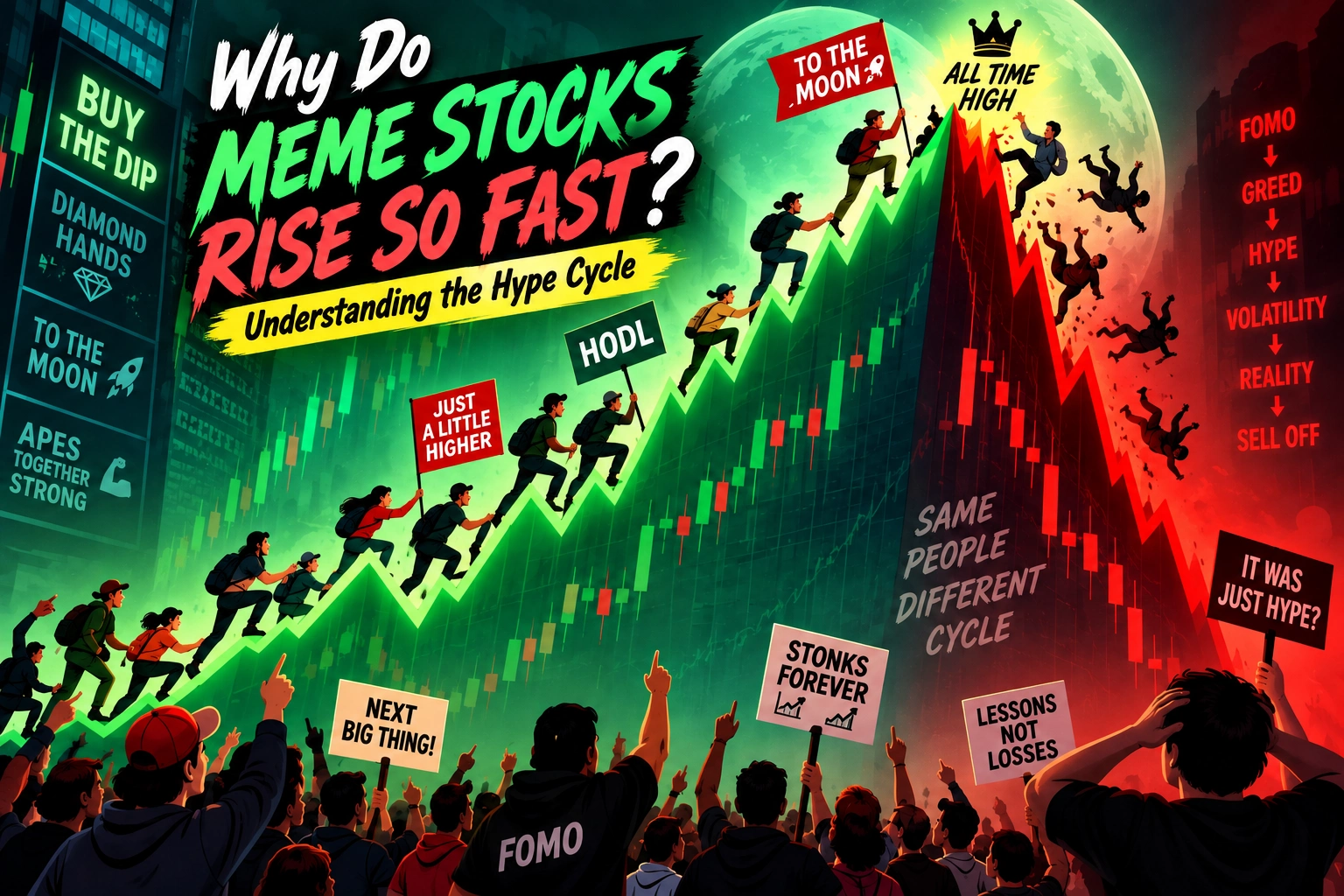
Meme stock rallies tend to follow a surprisingly consistent pattern. Here’s how the cycle typically unfolds:
- The Spark — A single post, tweet, or forum thread identifies an undervalued or heavily “shorted” stock and frames it as an opportunity or a cause worth rallying behind.
- The Snowball — Early believers buy in and post their gains (real or exaggerated), which pulls in more attention. Screenshots of profits spread faster than any warning label ever could.
- The FOMO Surge — Fear of missing out kicks in hard. People aren’t calculating intrinsic value anymore; they’re terrified of watching everyone else get rich without them.
- The Short Squeeze (sometimes) — If a stock has heavy short interest, rising prices force short-sellers to buy shares to cover their positions — which pushes the price up even further, creating a feedback loop.
- The Peak Mania — Media coverage explodes, casual investors pile in, and the stock becomes a headline rather than a company.
- The Comedown — Reality eventually reasserts itself. Early movers cash out, momentum fades, and the price often crashes hard, leaving latecomers holding the bag.
Why Does It Move SO Fast?
This is the part people find most baffling — and it comes down to a few very human, very modern forces working together.
1. Social Media Is a Speed Amplifier
Traditional stock tips used to spread through newsletters, TV segments, or word of mouth — slow, filtered, limited. Now, a single viral post can reach millions of potential buyers in minutes. There’s no delay between “idea” and “action” anymore. See it, tap “buy,” done.
2. Retail Trading Apps Removed the Friction
Commission-free trading apps made buying stocks as easy as ordering food delivery. No broker calls, no waiting periods, no barriers. When impulse and access collide, price movement becomes instant.
3. Community Identity, Not Just Investment Strategy
Meme stock communities aren’t just trading — they’re bonding. There’s a tribal, almost sports-team energy to it. Buying the stock becomes a form of belonging, of being “in on it,” which makes people hold on (and buy more) even when logic says otherwise.
4. Short Squeezes Create Explosive Feedback Loops
When a heavily shorted stock starts climbing, short-sellers are forced to buy back shares to limit their losses. That forced buying adds even more upward pressure — a mechanical multiplier on top of the emotional one.
5. Attention Is the New Currency
In today’s markets, attention itself has become a tradable asset. A stock trending on social media pulls in speculative capital purely because it’s visible — not because anyone has done deep research. Visibility creates volume, and volume creates volatility.
The Psychology Behind the Frenzy
At its core, the meme stock phenomenon isn’t really about finance — it’s about human behavior under pressure. A few forces are almost always at play:
- Herd mentality — humans are wired to follow the crowd, especially when uncertainty is high.
- Loss aversion in reverse — the fear of missing a gain can feel just as intense as the fear of losing money.
- Narrative bias — people don’t just want profit, they want a story (underdog wins, Wall Street loses).
- Dopamine-driven feedback — watching a number go up in real time triggers the same reward circuitry as gambling or gaming.
Once you see these patterns, meme stock rallies start to look less like random chaos and more like predictable human psychology playing out on a massive, networked scale.
The Bigger Picture: A New Kind of Market Force
Whether you see meme stocks as a fascinating case study in collective behavior or a warning sign about speculative excess, one thing is clear — they’ve permanently changed how markets can move. Price is no longer shaped only by earnings reports and interest rates; it’s shaped by memes, momentum, and millions of people hitting “buy” at the same emotional moment.
Understanding the hype cycle doesn’t mean you’ll always predict the next meme stock — but it does mean you’ll understand why it’s happening while everyone else is just along for the ride.
FAQ’s
1. What is a meme stock?
A meme stock is a company’s shares that gain rapid popularity through social media buzz and online communities rather than traditional financial analysis — think Reddit, X/Twitter, or TikTok-driven hype.
2. Why do meme stocks rise so quickly?
A mix of viral social media posts, commission-free trading apps, FOMO-driven buying, and sometimes short squeezes create a fast feedback loop that pushes prices up in a short window.
3. What is a short squeeze, and how does it relate to meme stocks?
A short squeeze happens when a heavily “shorted” stock’s price rises, forcing short-sellers to buy shares to cover their losses — which pushes the price up even more, often triggering explosive meme stock rallies.
4. Are meme stocks a good investment?
They can be extremely volatile and risky. Gains can be massive, but so can losses — especially for people who buy in late during the hype peak. It’s generally considered high-risk, speculative trading rather than traditional investing.
5. How long does a meme stock rally usually last?
It varies, but most hype cycles are short-lived — often days to a few weeks — before momentum fades and prices correct sharply once early investors start cashing out.
6. What triggers a meme stock in the first place?
Usually a spark: an undervalued or heavily shorted stock gets flagged by an influencer, forum post, or viral thread, framing it as an opportunity or a symbolic “stick it to Wall Street” moment.
7. Can meme stocks crash as fast as they rise?
Yes — often faster. Once hype fades and early buyers exit, the same herd psychology that drove the surge can trigger a rapid sell-off, leaving latecomers with steep losses.
8. How can I stay updated on the next potential meme stock trend?
Following dedicated market insight platforms like DailyTopStock, tracking unusual trading volume, and monitoring retail trading communities are common ways enthusiasts try to catch early momentum.
Note: This article is for educational and informational purposes only and isn’t financial advice. Meme stock investing carries significant risk, and individual outcomes vary widely — always do your own research or consult a financial professional before making investment decisions.
For more explainers breaking down the indices and terms shaping India’s markets, check out more coverage on DailyTopStocks.