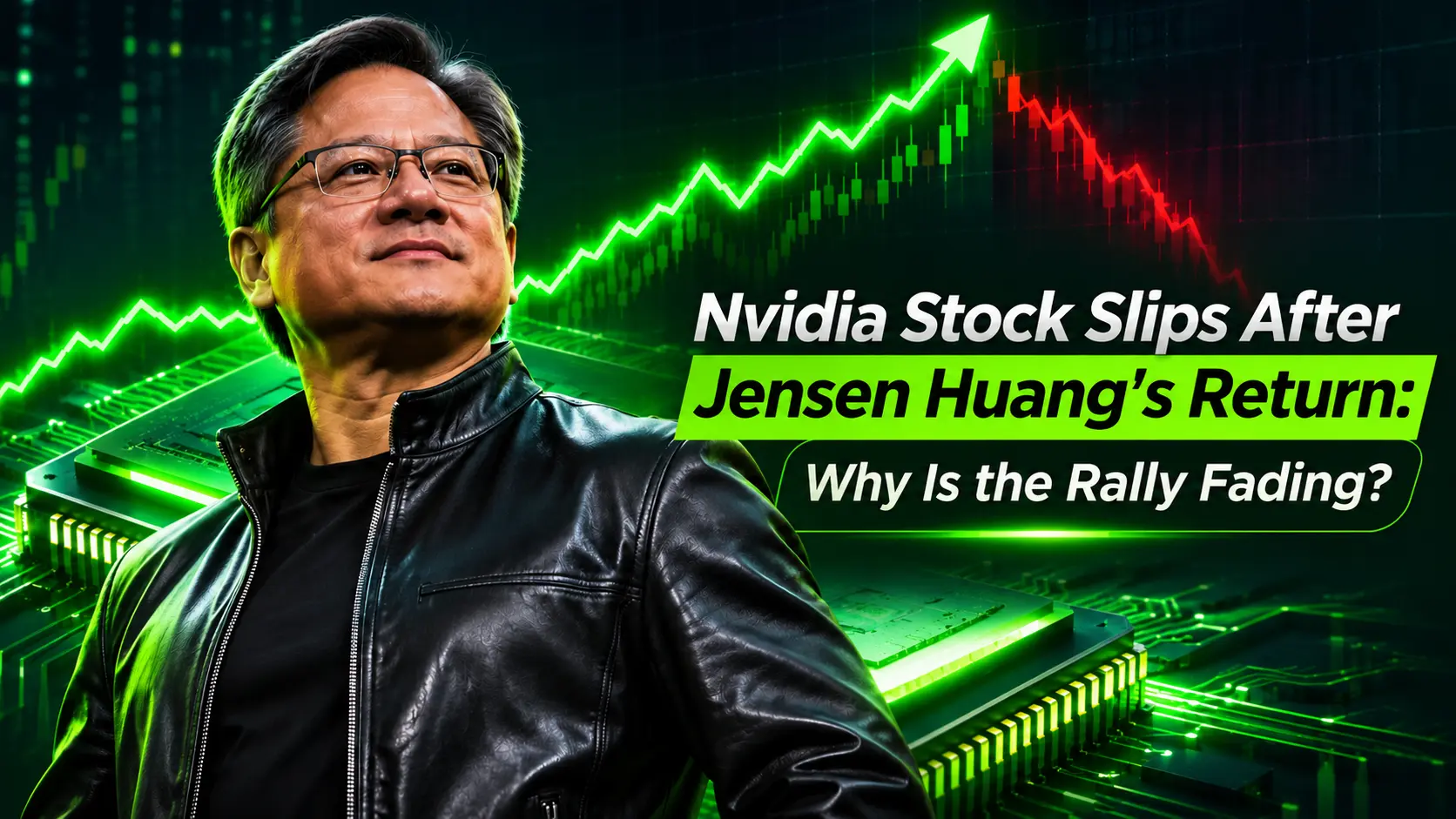
Nvidia Stock Slips After Jensen Huang’s Return: Why Is the Rally Fading?
A comeback worth nearly $1 trillion. The biggest one-day surge in over 23 years. And a sell-off that began just one day later.
Wall Street barely had time to celebrate Jensen Huang’s return to Nvidia before investors started questioning whether the excitement was justified.
On November 23, 2026, Nvidia stock jumped 31.5% after the board reinstated its co-founder as CEO. By Tuesday, shares had already fallen nearly 6%.
So what changed overnight? And if Huang’s exit was such a big problem, why hasn’t his return ended the sell-off?
Here is what happened, why Nvidia stock is falling again, and what it means for investors.
Jensen Huang Is Back: The Comeback That Shook Wall Street
Huang announced his resignation on November 12. Less than two weeks later, on November 23, Nvidia’s board unanimously reinstated him as president, CEO and board director. Colette Kress, who had stepped in temporarily, went back to her full-time role as CFO.
The exit itself followed reports about Huang’s personal conduct, and Reuters reported that his reinstatement came under pressure from US President Donald Trump. Between his resignation and November 20, Nvidia shares had dropped nearly 28%.
Huang co-founded Nvidia in 1993 and turned a graphics chip maker into one of the most influential companies in AI. His return reassured investors about leadership continuity, strategy and relationships with big tech clients.
But confidence in a CEO and confidence in a stock’s valuation are two very different things.
Also Read: Jensen Huang Is Out: Why Nvidia Just Lost Hundreds of Billions in a Single Morning
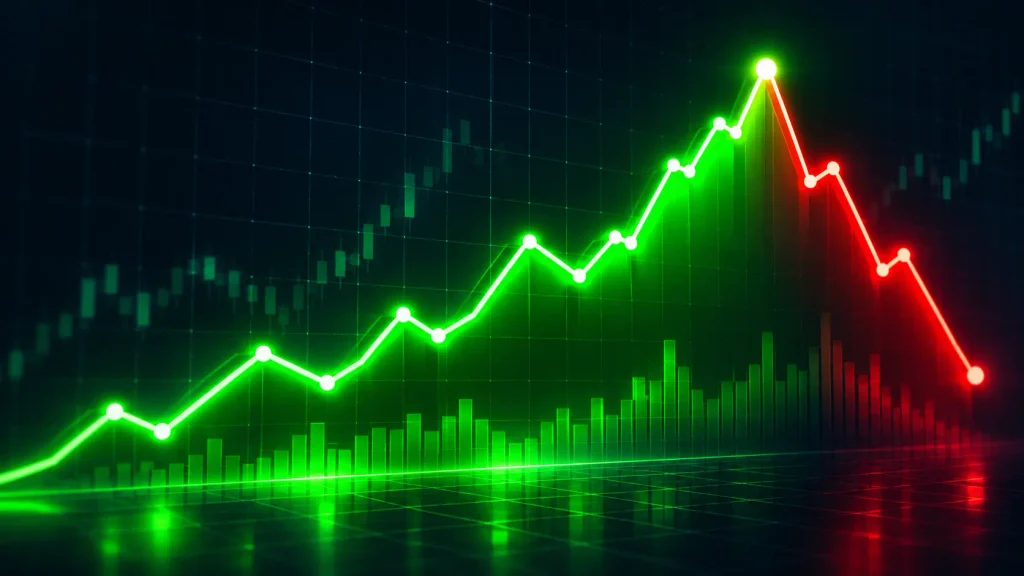
From Historic Rally to Sudden Sell-Off: Nvidia Stock in Numbers
| Date | Market development |
| November 12, 2026 | Huang’s resignation announced; stock begins sliding from about $173.73 |
| November 20, 2026 | Shares close at $125.53 |
| November 23, 2026 | Huang returns; Nvidia surges 31.5% to $165.05 |
| November 24, 2026 | Shares fall 5.9% to $155.38 |
| November 25, 2026 | Shares fall a further 3.91% to $149.30 |
By Wednesday, the stock had given back roughly 10% of Monday’s close. It is still well above its pre-comeback low, but also well below where it traded before Huang resigned. So was Monday the start of a real recovery, or just a wave of relief?
Why Is Nvidia Stock Falling Despite Jensen Huang’s Return?
The obvious answer is that investors are disappointed. That’s not necessarily the case. Several factors are at play.
1. The Profit-Booking Effect
Imagine buying a stock on Friday and watching it rise more than 30% on Monday. Would you hold, or lock in some gains? Many traders chose to sell, creating pressure even though the business itself hadn’t changed. MarketWatch also pointed to profit-taking by investors who bought during the earlier decline.
2. The Uncertainty Isn’t Gone
The leadership crisis is over, but governance questions remain. Nvidia has confirmed its independent investigation will continue, set up a National Security and Export Control Committee, and started a search for a chief compliance officer.
3. Doubts About the AI Boom
Big tech has poured huge sums into AI chips, data centres and cloud infrastructure, and Nvidia has benefited the most. Investors now ask:
- Can companies earn enough revenue from their AI spending?
- Can the current pace of investment continue?
- Do AI valuations justify future earnings?
These worries existed before Huang resigned, and they haven’t gone away.
4. Export Restrictions
On November 26, Reuters reported that Nvidia had reportedly suspended server shipments to four Southeast Asian countries amid US export restriction developments. For a company so dependent on global demand, any new curbs create real uncertainty.

The Paradox: Nvidia’s Business Is Still Growing
Nvidia’s results for the third quarter of fiscal 2027, announced on November 17, showed revenue of $115.8 billion, up 103% year on year. That is not a business in trouble.
So why is the stock struggling? Because markets don’t just reward growth. They reward results that beat the expectations already built into the price. A great company and a great investment at a particular price are not always the same thing.
Why Nvidia’s Stock Matters Beyond Nvidia
Nvidia sits at the centre of an ecosystem of chipmakers, cloud providers, data centre operators and AI software firms. When it rises, confidence across AI improves. When it falls, the whole theme gets questioned.
After Huang’s return, Asian chip stocks like TSMC, Samsung Electronics and SK Hynix also gained, but renewed selling later hit the wider tech sector. It shows how dependent the AI trade has become on a handful of companies.
Is the AI Bubble Finally Starting to Burst?
Every tech revolution has had periods of extreme enthusiasm. The dot-com boom survived as a technology, but many of its companies and valuations did not.
Nvidia is different in one key way: it earns substantial profits from products with real demand. A dip in its stock doesn’t mean AI is collapsing. It may simply mean investors are getting pickier about valuations and the sustainability of growth.
The real question is no longer whether AI is transformative. It’s whether it can generate enough value to justify the money being spent on it.
What Does Nvidia’s Volatility Mean for Indian Investors?

Even without owning Nvidia shares, you may have indirect exposure to the US tech sector.
| Investment segment | Potential impact |
| US technology mutual funds | Direct exposure to big tech moves |
| Nasdaq 100 ETFs | Volatility driven by large tech stocks |
| Indian IT companies | Shifts in global tech spending expectations |
| Indian semiconductor stocks | Changes in chip sector sentiment |
| Data centre companies | Changes in AI infrastructure expectations |
| Indian equity markets | Shifts in global risk appetite and foreign flows |
Nvidia doesn’t decide the direction of the Sensex or Nifty. Domestic earnings, interest rates and policy matter more. But it is a useful signal of global tech sentiment and risk appetite.
What Investors Should Watch Next
Rather than daily price swings, keep an eye on:
- AI infrastructure spending: whether big tech keeps investing in chips and data centres.
- Corporate governance: how Nvidia handles its investigation and compliance measures.
- US export rules: whether new restrictions limit international sales.
- Upcoming results: whether revenue, profit and guidance meet expectations.
- Valuation: whether the share price lines up with future earnings.
The Bigger Picture
On Monday, investors celebrated a visionary founder’s return. By Wednesday, attention was back on valuations, regulation and AI spending. Nvidia’s technology, products and financial results hadn’t changed. Only sentiment had.
Huang’s return may have restored confidence in the leadership, but keeping it depends on execution, governance and delivering on huge AI expectations. The AI revolution is far from over, but the market now wants results, not just promises.
Stay updated with the latest stock market news, global financial developments and simplified investing insights on Daily Top Stocks.
FAQs
1. Why is Nvidia stock falling after Jensen Huang’s return?
Mainly profit-booking after a historic rally, ongoing governance and regulatory concerns, and questions about the sustainability of AI spending.
2. When did Jensen Huang return as Nvidia’s CEO?
On November 23, 2026, as president, CEO and board member.
3. How much did Nvidia stock rise after his return?
About 31.5% on November 23, 2026, adding nearly $1 trillion in market value.
4. How much did it fall afterwards?
5.9% on November 24 and another 3.91% on November 25, closing at $149.30.
5. Is Nvidia’s business slowing down?
No. Q3 FY2027 revenue was $115.8 billion, up 103% year on year. Future growth still depends on demand, AI spending and regulation.
6. Does Nvidia’s stock affect the Indian market?
Indirectly. It can influence sentiment in tech, semiconductor and data centre stocks, as well as international and Nasdaq-linked funds.
7. Does the decline mean an AI bubble?
Not necessarily. It may reflect changing expectations and valuations rather than a collapse of the AI industry.
Disclaimer: This article is for informational and educational purposes only and does not constitute investment advice. Stock market investments are subject to market risks.